Efficient Scaffold Hire: Maximising Your Project’s Potential
When it comes to construction and renovation projects, scaffold hire plays a crucial role in ensuring safety, efficiency, and productivity. Whether you’re a professional contractor or a DIY enthusiast, understanding the ins and outs of scaffold rental can significantly impact your project’s success.
In this comprehensive guide, we’ll explore the various aspects of scaffold hire, from selecting the right equipment to maximising its potential on your job site.
The Importance of Proper Scaffold Selection
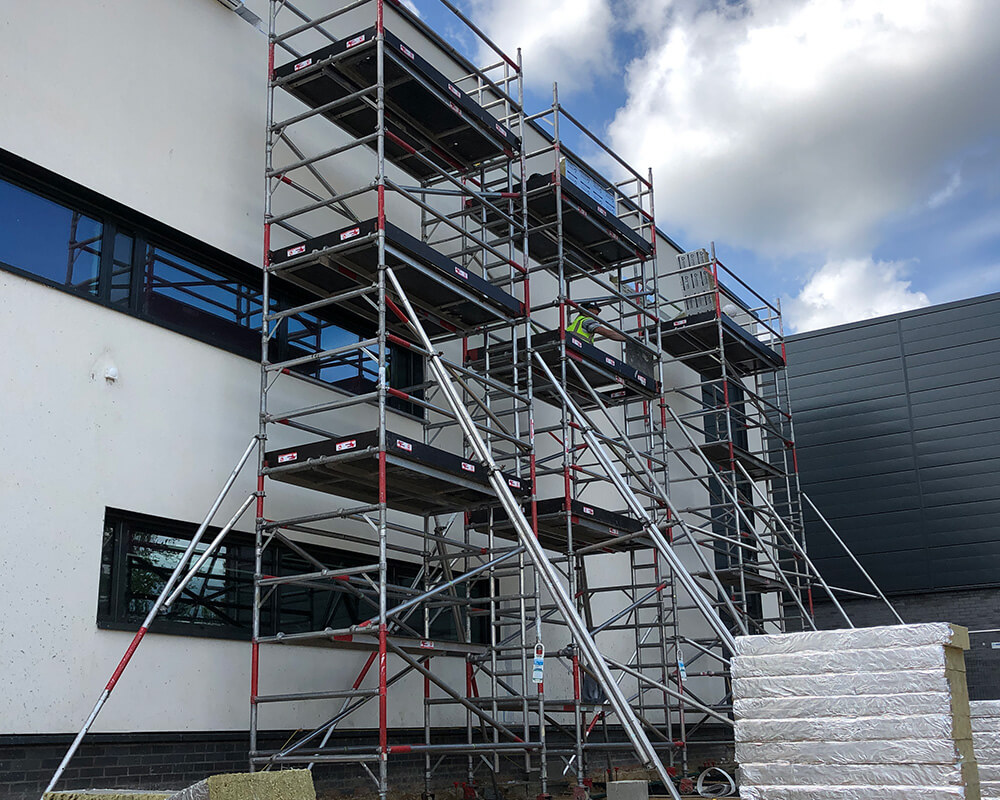
Choosing the right scaffolding system is paramount to the success of your project. Let’s delve into the key factors you should consider when selecting scaffolding for hire.
Types of Scaffolding Available
There are several types of scaffolding systems available for hire, each suited to different project requirements:
Understanding the unique features and applications of each type will help you make an informed decision when hiring scaffolding for your project.
Assessing Your Project’s Needs
Before committing to a scaffold hire, it’s essential to evaluate your project’s specific requirements. Consider factors such as:
- Project duration
- Working height
- Load-bearing capacity
- Site conditions
- Access requirements
By carefully assessing these aspects, you’ll be better equipped to choose the most suitable scaffolding system for your needs.
Maximising Safety with Proper Scaffold Use
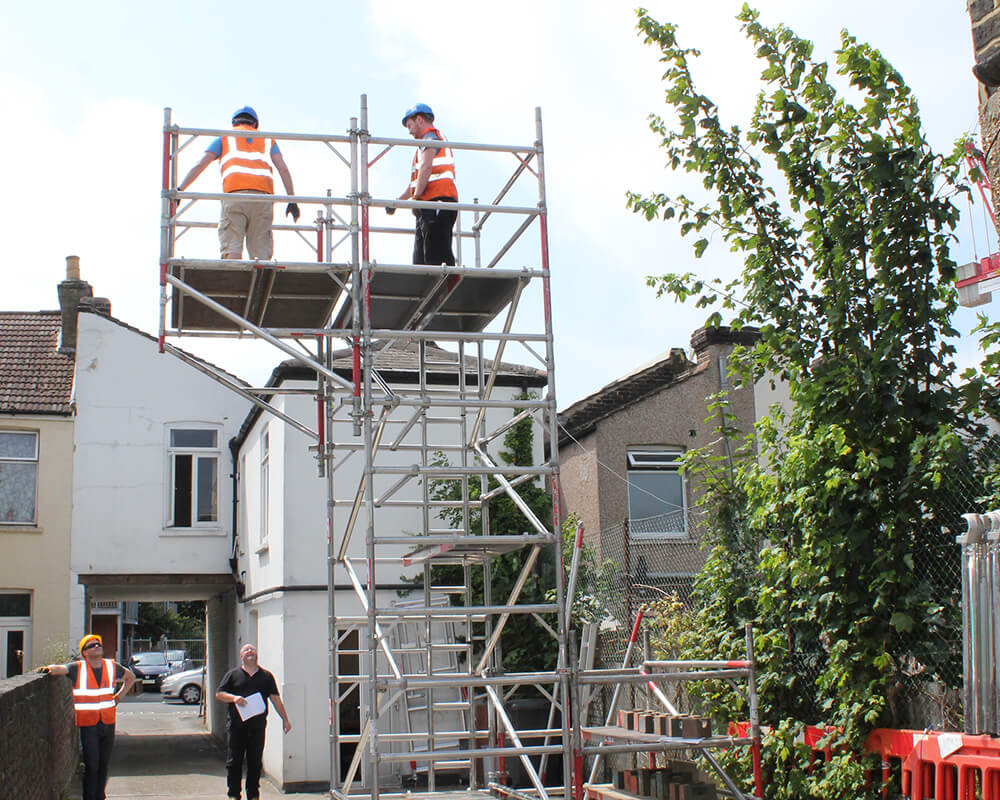
Safety should always be the top priority when working with scaffolding. Let’s explore some essential safety considerations and best practices.
Training and Certification
Ensure that all workers who will be using the scaffolding are properly trained and certified. Both IPAF training and PASMA training offer a range of courses focussed on working from height.
Depending on the course you choose, working from height training may involve:
- Understanding scaffold assembly and disassembly procedures
- Recognising potential hazards
- Knowing how to use personal protective equipment (PPE)
- Familiarity with load limits and weight distribution
Investing in proper training can significantly reduce the risk of accidents and injuries on your job site.
Regular Inspections and Maintenance
Routine inspections are crucial for maintaining the safety and integrity of your hired scaffolding. Implement a regular inspection schedule that includes:
- Daily pre-use checks
- Weekly thorough examinations
- Post-severe weather inspections
Address any issues promptly and consult with your scaffold hire provider if you have any concerns about the equipment’s condition.
Optimising Productivity with Efficient Scaffold Setup
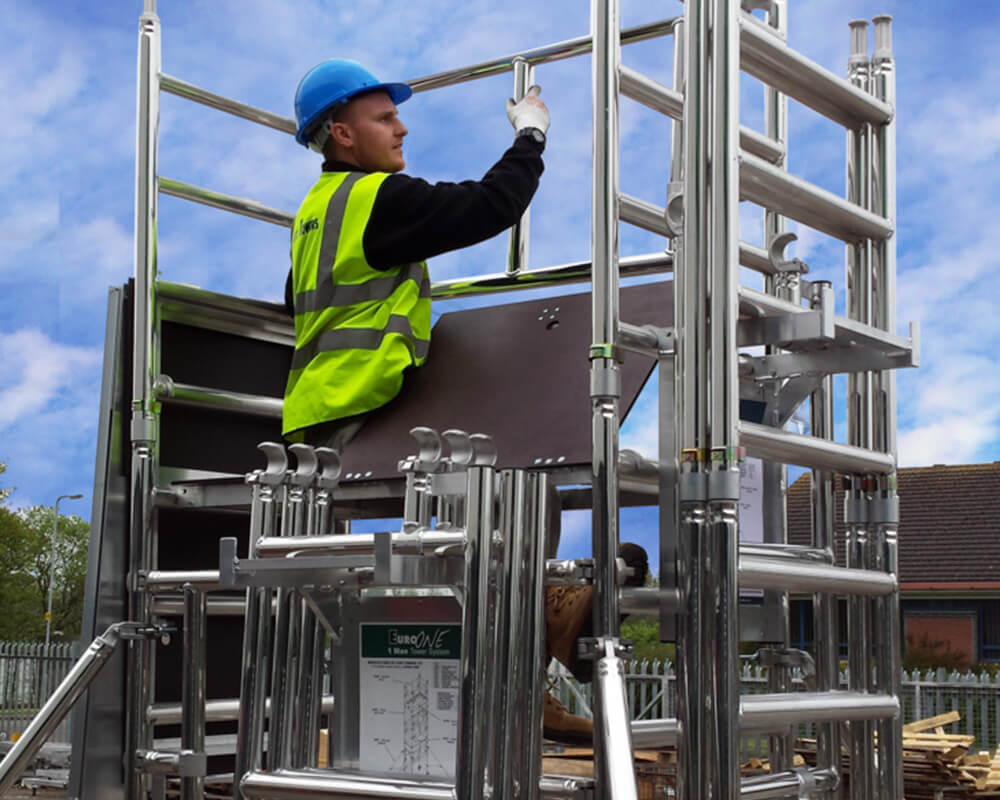
A well-planned scaffold setup can significantly boost your project’s efficiency and productivity. Consider the following strategies to make the most of your scaffold hire.
Strategic Placement and Access Points
Carefully plan the placement of your scaffolding to maximise accessibility and minimise worker movement. Consider:
- Proximity to material storage areas
- Ease of access for workers and equipment
- Optimal positioning for different work tasks
By strategically placing your scaffolding, you can reduce time wasted on unnecessary movement and improve overall workflow efficiency.
As you can see, there are many considerations when selecting the best scaffold towers for your project. If you’d like to find out more about working with Access Towers on your next project, get in touch today. For more information about any of our products or services call 0208 665 1181 or send us a message online and we’ll get back to you as quickly as possible.
Maximising Safety and Efficiency with Tower Scaffolds
Tower scaffolds are essential structures in the construction industry, providing safe and stable platforms for workers to carry out tasks at height. Whether you’re a professional contractor or a DIY enthusiast, understanding how to maximise safety and efficiency when using these versatile structures is crucial.
In this comprehensive guide, we’ll explore the key aspects of tower scaffold usage, from proper assembly to maintenance and best practices, ensuring you can work confidently and productively at elevated heights.
The Importance of Proper Tower Scaffold Assembly
One of the most critical aspects of using tower scaffolds safely and efficiently is ensuring they are correctly assembled. Let’s dive into the key components and steps involved in erecting a tower scaffold:
Essential Components of a Tower Scaffold
Before assembling your scaffold tower, familiarise yourself with its main components. These may include:
- Base plates and adjustable legs
- Vertical frames
- Horizontal braces
- Diagonal braces
- Platform boards
- Guardrails and toe boards
- Stabilisers or outriggers
Step-by-Step Assembly Process
Follow these steps to ensure your tower scaffold is erected safely and efficiently:
- Inspect the ground: Ensure the surface is level and capable of supporting the scaffold’s weight.
- Install base plates: Place them at the correct spacing and adjust for any slight ground irregularities.
- Erect the first level: Attach vertical frames to the base plates and connect them with horizontal braces.
- Add diagonal braces: These provide stability to the structure.
- Install platform boards: Secure them properly at each level as you build upwards.
- Continue building: Add subsequent levels following the manufacturer’s guidelines.
- Attach guardrails and toe boards: These are essential safety features for preventing falls and dropped objects.
- Install stabilisers or outriggers: Use these for additional stability, especially for taller structures.
Remember, always consult the manufacturer’s instructions and follow local regulations when assembling mobile scaffold towers.
Many of our mobile scaffold towers require minimal assembly. This means that you can get to work far more quickly and boost efficiency when working on time-sensitive projects.
Enhancing Safety Measures on Tower Scaffolds
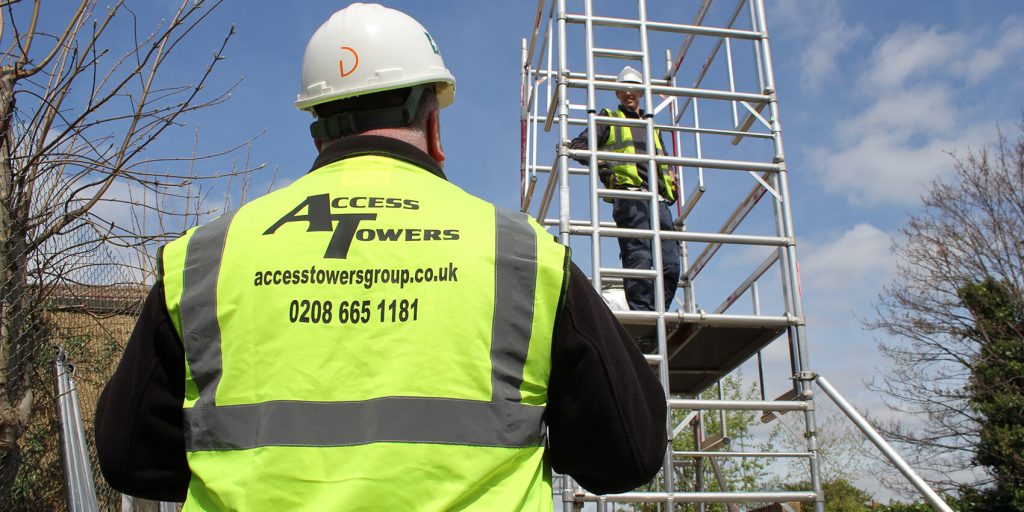
Safety should always be the top priority when working with tower scaffolds. Here are some essential measures to implement:
Personal Protective Equipment (PPE)
Ensure all workers are equipped with appropriate PPE, including:
- Hard hats
- Safety harnesses
- Non-slip footwear
- High-visibility clothing
- Gloves
Regular Inspections and Maintenance
Conduct thorough inspections of your scaffold tower before each use and at regular intervals.
- Check for damaged or missing components
- Ensure all connections are secure
- Verify that guardrails and toe boards are in place
- Inspect platform boards for wear or damage
- Check stabilisers and outriggers for proper deployment
Weather Considerations
Be mindful of weather conditions when working on tower scaffolding. Avoid working in high winds or severe weather. Ensure the scaffold is properly anchored in windy conditions. And take extra precautions on wet or icy surfaces.
As you can see, proper deployment, correctly following health and safety procedures, and conducting regular inspections are all essential elements of the safe and efficient us of scaffold towers.
If you’re planning to work on a project with an element of working from height, at Access Towers, we can supply you with high quality scaffold towers to meet your exact project requirements. To find out more about our range of products and services call 0208 665 1181 or contact us online.
Scaffolding Towers to Hire: Everything You Need to Know
In the fast-paced world of construction, maintenance, and repair, scaffolding towers play a pivotal role in ensuring safety and efficiency. Whether you’re a contractor, a DIY enthusiast, or a business owner planning a renovation, hiring scaffolding towers can provide the elevation and stability you need to get the job done right. Here’s everything you need to know about scaffolding towers to hire.
What Are Scaffolding Towers?
Scaffolding towers, or scaffold towers, are temporary support structures used to provide workers with a stable and secure platform at various heights. Unlike traditional scaffolding systems that are assembled in place, scaffold towers are modular, easy to assemble, and often come with wheels for mobility. They are ideal for tasks such as painting, cleaning, maintenance, construction, and repairs where access at height is required.
Types of Scaffolding Towers
-
Mobile Scaffold Towers
Mobile scaffold towers are equipped with locking wheels, allowing easy movement from one area to another without disassembly. These are particularly useful in situations where frequent relocation is necessary.
-
Static Scaffold Towers
Static scaffold towers are fixed in place and provide a stable working platform. They are commonly used for longer-term projects where the tower can remain in a single location throughout.
-
Adjustable Scaffold Towers
Adjustable scaffold towers have variable height settings. This adaptability makes them suitable for tasks requiring access to different heights, providing flexibility for diverse projects.
-
Cantilever Scaffold Towers
Cantilever scaffold towers have extensions that protrude beyond the base footprint, allowing workers to navigate obstacles such as buildings and rooftops safely.
Key Considerations When Hiring Scaffolding Towers
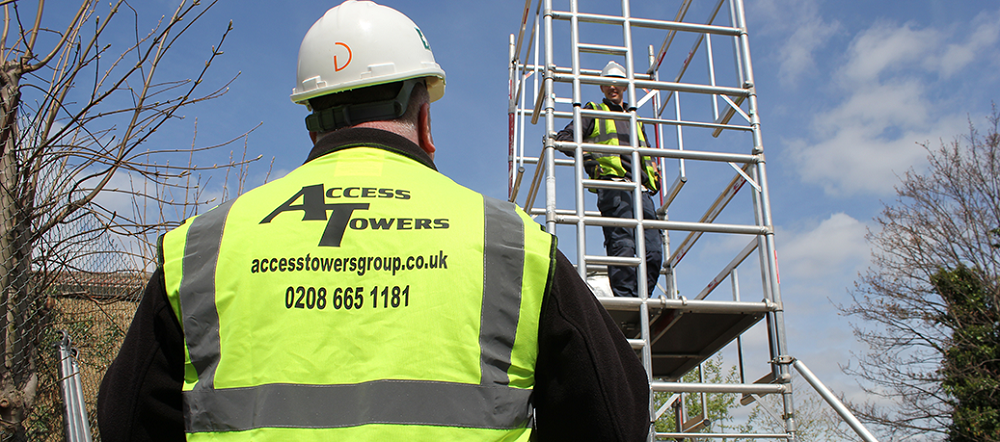
-
Safety
Safety should be your top priority. Ensure that the scaffolding tower complies with local safety regulations and standards. Check for features such as guardrails, locking wheels, and stabilisers to prevent accidents.
-
Load Capacity
Different tasks require different load capacities. Be sure to choose a scaffold tower that can support the combined weight of the workers, tools, and materials.
-
Height
Determine the height you need to reach and choose a scaffold tower that provides adequate elevation. Make sure to account for the height of the working platform in relation to the task.
-
Ease of Assembly
Opt for scaffold towers that are easy to assemble and dismantle. Some models come with tool-free assembly, making them convenient and time-efficient.
-
Mobility
If your project requires frequent movement, a mobile scaffold tower with lockable wheels is essential. Ensure the wheels are sturdy and can handle the terrain of your worksite.
-
Rental Duration
Consider how long you’ll need the scaffold tower. Some suppliers offer daily, weekly, or monthly rental options. Choose a plan that aligns with your project timeline to manage costs effectively.
Advantages of Hiring Scaffolding Towers
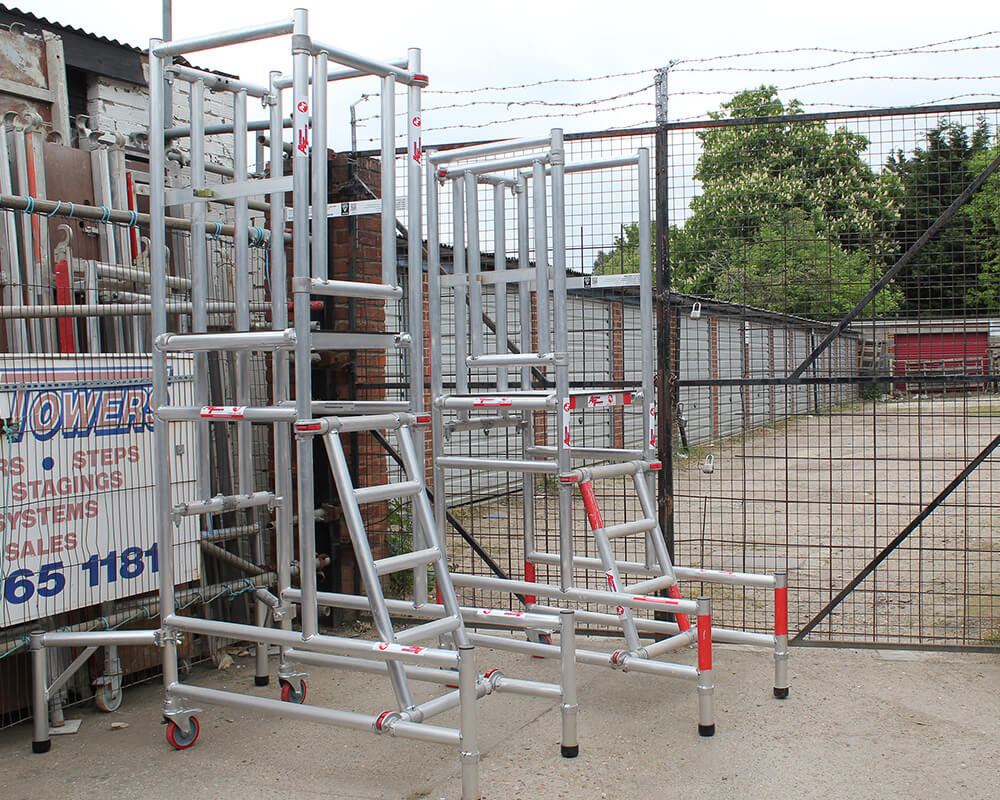
-
Cost-Effective
Hiring scaffolding towers can be more cost-effective than purchasing, especially for one-time projects or infrequent use. You save on maintenance, storage, and upfront purchase costs.
-
Flexibility
Renting allows you to choose the right type of scaffold tower for each specific task without being tied down to one particular model.
-
Maintenance and Support
Rental companies often provide maintenance and support, ensuring that the equipment remains in good condition and meets safety standards.
-
Space-Saving
Hiring eliminates the need for storage space, which can be a significant advantage for businesses with limited facilities.
Conclusion
When it comes to accessing work at height, scaffolding towers offer versatility, safety, and efficiency. By considering the type of scaffold tower you need, assessing key safety features, and evaluating rental terms, you can ensure a smooth and successful hiring experience. Investing time in selecting the right scaffolding tower for hire not only boosts productivity but also enhances safety, making it an invaluable asset for your next project.
If you’d like to find out more about the range of scaffold towers that you can hire from Access Towers, get in touch today. For more information about our product range and professional services call 0208 665 1181 or send us a message online and we’ll get back to you as quickly as possible.
Mastering Height Safety: The Essential Benefits of IPAF Training
Working from height can be dangerous. To ensure that you and your team are fully up to date with the latest working at height health and safety regulations, IPAF training is an important element of workplace safety.
Why attend an IPAF training course?
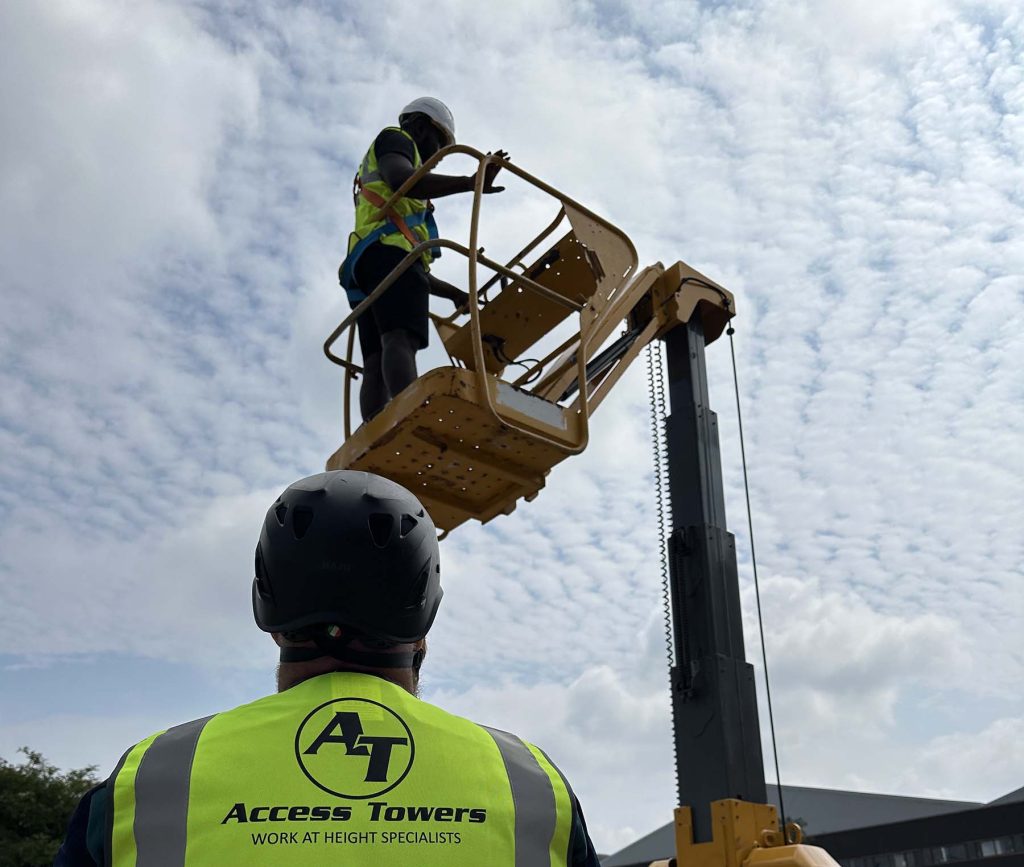
If you regularly work on projects involving scaffolding, ladders, and raised platforms, IPAF training is a great choice for you. There are a wide variety of IPAF training courses to choose, from site assessment to operator training and harness safety training.
For people working in the construction industry, civil engineering, factory or warehouse environments, IPAF training provides all the information and skills you need to safely work from height.
What are the benefits of IPAF training?
As mentioned above, IPAF training is suitable for anyone who regularly works from height. Some of the more specific benefits of IPAF training include the following.
More employment opportunities
When you successfully complete IPAF training you will be issued with an IPAF PAL card. This certification is recognised across the construction industry and in many other workplaces where working at height is a requirement.
Therefore, IPAF PAL card holders are far more likely to be successful when seeking employment in roles where working from height is required. Any employer will view IPAF training as a distinct advantage as the card holder will be ready to work safely in an above ground raised environment.
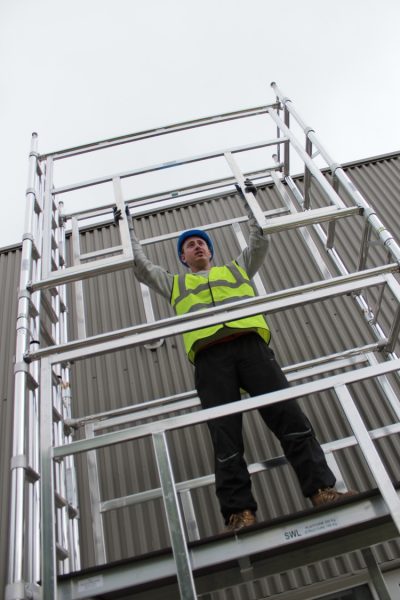 Safer working practices
Perhaps the most important benefit of completing IPAF training is the safe working practices you will learn during the course. All working from height environments involve a risk of serious accidents and even death. IPAF training is designed to limit risk by providing delegates with all the knowledge they need to work safely from elevated areas.
When working from height, you should be able to identify and react to any hazards, understand emergency procedures, and be able to inspect all equipment to ensure that it is in good condition before use. Attending an IPAF course will provide you with all this information and much more to ensure that you’re as safe as possible when working from height.
Head over to our IPAF training FAQs page to find more detailed information about the courses we offer. Alternatively, you can contact Access Towers directly to find out more about the IPAF training course you wish to attend. Call us on 0208 665 1181 or send us a message online and we’ll get back to you as quickly as possible.
Scaffold Towers Explained: Types, Uses, and Safety Tips
When it comes to working at heights, safety is paramount. For the safest and most efficient building access, scaffold towers are an indispensable tool. Whether you’re a professional contractor or a DIY enthusiast tackling home improvement projects, understanding the various types of scaffold towers available can help ensure your work is both safe and productive.
In this blog post, we’ll look at the different kinds of scaffold towers available today, their common uses, and some essential tips to keep you safe when using a scaffold tower.
Types of Scaffold Towers
When choosing a scaffold tower, you’ll need to decide what type of scaffold tower best meets your needs. Here are some of the most popular types of scaffold towers and their most common uses.
Mobile Scaffold Towers
Mobile scaffold towers are fitted with wheels or castors. This makes them easy to move across worksites. If you’re working on a large site where you need to move around different areas, they are a great choice.
Ideal for tasks requiring frequent relocation, they can be used for painting large surfaces, installing lighting fixtures, or fitting and repairing roofline on a building exterior.
Folding Scaffold Towers
Folding scaffold towers as their name suggests feature a compact design which allows them to be folded down when not in use. They are a great choice for companies that need to erect and assemble the tower at multiple locations and be able to store and transport the equipment easily both in their van and at their place of work.
Folding scaffold towers are the perfect choice for indoor jobs where space might be limited. They’re also great for quick setup and takedown scenarios like repairing a damaged façade or carrying out maintenance work on a wall mounted electrical fitting.
Stairway Access Towers
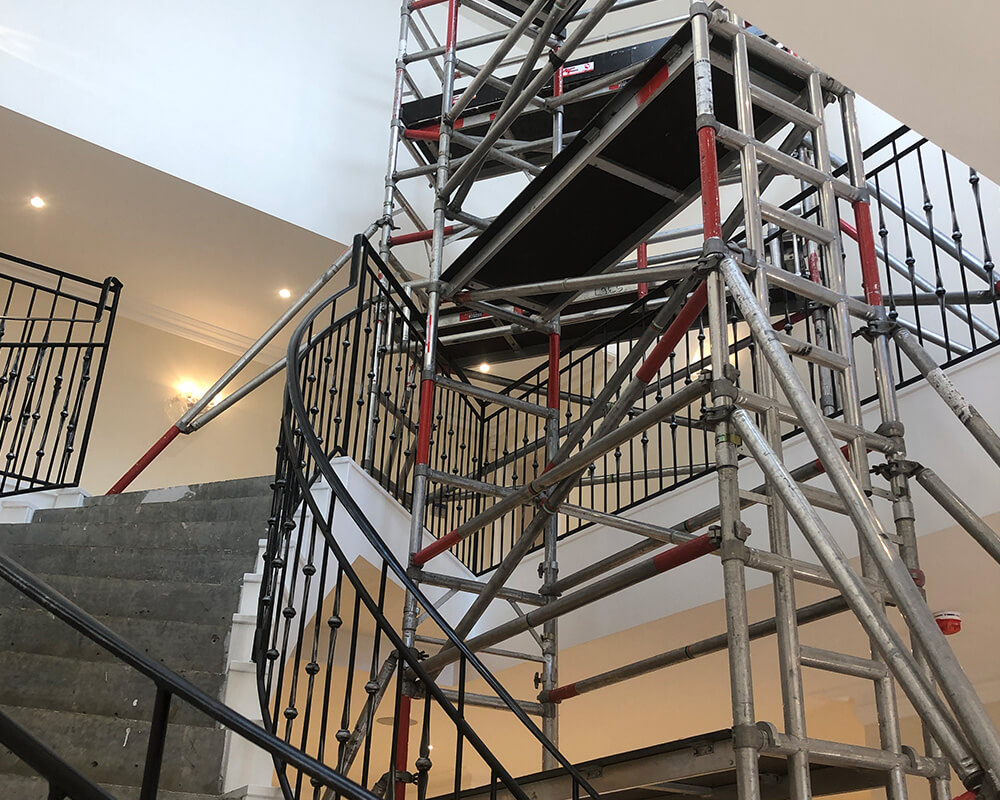
Stair towers are designed specifically with staircases in mind so workers can easily move upwards and downwards while carrying tools. They can be used on all types of staircases including multi-floor interior stairwells and exterior fire escapes.
Stair towers are widely used during staircase installation and repair. They provide maximum stability even if placed on uneven stairs and can be adjusted to ensure safety is optimised. For all types of painting and renovation work on existing staircases, they are also a great option.
Cantilever Scaffold Towers
Cantilever scaffold towers are designed to provide access to out of reach areas where there is an obstruction at ground level. One section of the tower protrudes outward to create a platform providing access to otherwise difficult-to-reach areas without additional support underneath.
For use on complex sites where outbuildings, garages, trees, and bushes may be hampering access, they provide a safe and easily deployable raised platform. Particularly useful around building edges and corners, they provide access flexibility that is impossible with standard scaffold towers.
Common uses of scaffold towers
Scaffold towers are used for all sorts of construction, maintenance, and home renovation tasks. Some common uses for scaffold towers include:
- Painting and decorating
- Plastering walls and ceilings
- Repairing, cleaning, and installing windows
- Replacing light fittings and other electrical fittings
- Hanging wallpaper
- Clearing gutters and repairing/replacing roofline
- Roof repairs and tiling
In commercial settings, scaffold towers are also useful to create temporary stages and platforms for setting up exhibitions and displays.
Essential safety tips for working with a scaffold tower
As mentioned above, when working from heights, safety is always paramount. If you’re planning to use a scaffold tower, here are some essential safety tips to help prevent any accidents.
- Conduct regular inspections – ensure no damage or wear and tear before every usage by thoroughly checking all parts, joints, and connections.
- Inspect ground surface – when setting up a scaffold tower, avoid unstable terrain and choose flat solid base locations to reduce the risk of tipping accidents.
- Use guardrails – prevent falls by fitting guard rails and hand holds that meet recommended height minimums.
- Wear appropriate Personal Protective Equipment (PPE) – consider using harnesses, helmets, gloves, and non-slip footwear to keep workers protected when working from height.
Finally, undertaking working at heights training will ensure that anyone using a scaffold tower is confident in how to do so in a safe manner. Courses such as PASMA and IPAF are designed to make sure anyone using scaffold towers fully understands how to operate them safely and correctly.
If you’d like to find out more about any of our scaffold towers, contact Access Towers today. You can call us on 020 8038 1723, send us a message using our online contact form, or e-mail info@accesstowersgroup.co.uk
Ready, Set, Rescue! Get First Aid Certified with Access Towers
Having a certified first aider is an essential part of meeting workplace health and safety requirements. Whether you work in an office, a factory, a building site or anywhere else, accidents and emergencies can happen. When they do, you need someone who knows how to stay calm and react in the best way.
First aid training courses from Access Towers

At Access Towers, we now run a range of first aid training courses from our Croydon Training Centre. Our first aid training courses are suitable for anyone who wants to become first aid certified and we also run refresher courses for existing first aiders.
Our first aid training courses cover low, medium, and high-risk environments, administering first aid, and the latest workplace health and safety regulations. All successful delegates will receive an industry recognised FAA Level 3 Award alongside CPD (Continuing Professional Development) certification.
How do I book a first aid training course?
Our first aid training courses are run alongside our working at height equipment training sessions on a flexible basis. Have a browse of our interactive calendar to find a convenient course for you.
If you can’t find anything that suits, you can use our simple request a course form. Enter as much information as possible about the type of course you’re interested in and the dates when you’re available, and we’ll get back to you as soon as possible to arrange a place on the next suitable first aid course for you.
What skills will I learn on a first aid training course?

As mentioned above, our first aid training courses are designed to provide delegates with the essential skills needed to react quickly in a workplace emergency. Courses also cover health & safety in the workplace. This includes conducting health & safety inspections and how to reduce risk by creating a safer working environment.
You will also learn about the importance of record keeping, reporting injuries, preventing infections, and responding to a wide range of workplace emergency situations from minor injuries to using a defibrillator and knowing when to contact the emergency services.
If you’d like to find out more about getting first aid certified with help from Access Towers call 020 3666 2249 or e-mail info@accesstowersgroup.co.uk
Choosing the right steps for your construction needs
When working at height, you’ll need the right type of ladder to match your needs. Loss of stability is often cited as a major cause of accidents when working from height. Therefore, choosing the right steps when working from height is an essential part of construction site safety.
What size ladder do I need?
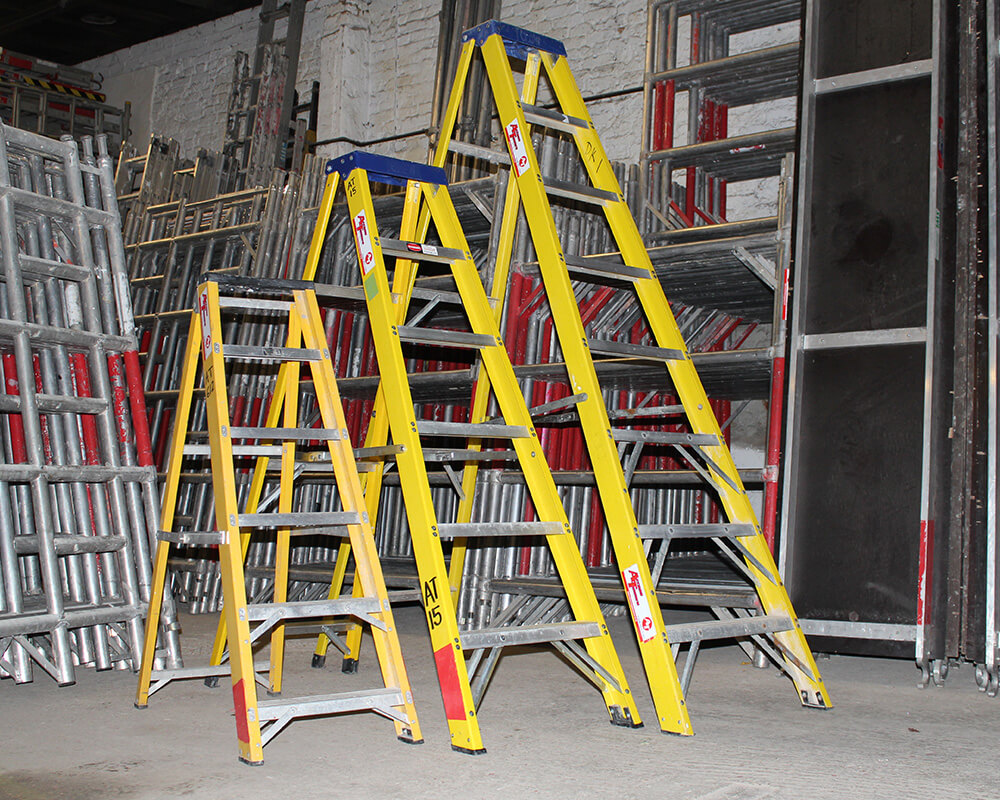
When you’re working from height but don’t need a scaffold tower or extendable ladder, a set of steps is a great solution. For low level access, steps are usually a safe and suitable solution to provide stable access to areas that are just out of reach from ground level.
The first thing to do when choosing the right steps for your construction needs is to decide what size of steps you need. This will be dictated by the height you need to reach. At Access Towers, we supply a range of different steps. Our steps are available with your choice of six treads, eight treads, ten treads, or twelve treads.
To reach higher areas, we also supply a range of extendable and A-frame ladders.
What type of work can be done from a step ladder?
Step ladders are the perfect choice for a wide variety of low level working from height construction projects. Some common uses for steps include:
- External and internal painting and decorating
- All types of wall and ceiling plastering
- Property renovations
- Repair and remedial work
- Gardening maintenance
All our step ladders are suitable for use in domestic, commercial, and industrial settings and are designed to be used in all weather conditions where appropriate health and safety measures have been met.
A selection of alloy and fiberglass steps
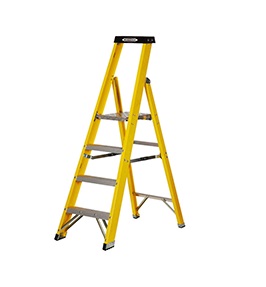
At Access Towers, we supply a selection of steps to hire. Our steps can be specified in either a metal alloy or fiberglass construction. Both options are lightweight and foldable, making them easy to transport, convenient to store and quick to deploy.
If you need to work in close proximity to live electrical cables, our fiberglass steps are the safest option. As fiberglass is an electrical insulator and does not conduct electricity, we always recommend using fiberglass steps in situations where you may come into contact with electrical equipment, cabling, or power sources.
When you want a strong, durable, weatherproof, and corrosion resistant solution to reach low level heights, our selection of steps are the best choice for you. To find out more about hiring high quality steps from Access Towers, contact us today. You can call us on 0208 665 1181 or send us a message online and we’ll get back to you as quickly as possible.
How much does PASMA training cost?
PASMA training courses are designed to teach people how to safely use scaffold towers and low-level access equipment. There are a variety of PASMA courses available, and in the table below these courses are detailed along with the training cost. Some courses are classroom-based covering topics such as health and safety, working at height, and scaffold tower assembly. Other courses involve a practical element where delegates will gain experience assembling and using a scaffold tower or low-level access equipment while being supervised by a qualified and experienced instructor.
The cost of PASMA training depends on the course you choose. As a general idea, here are some of the prices of the PASMA training courses provided through Access Towers.
PASMA training courses cost comparison
| PASMA course name |
Cost per delegate |
| PASMA Towers for Users |
£125 |
| PASMA Combined (users & low-level) |
£150 |
| PASMA Towers with Cantilevers |
£175 |
| PASMA E-learning Combined (users & low-level) |
£175 |
| PASMA Towers for Managers |
£150 |
| PASMA Towers for Users with Bridges |
£175 |
| PASMA Towers on Stairs |
£175 |
PASMA training courses – what to expect
The different PASMA training course provide specific training on various access equipment. Here are some details of what to expect from the different PASMA course that we offer.
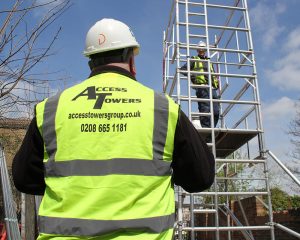 PASMA Towers for Users
PASMA Towers for Users is the foundation course for people operating access equipment. Certification from this course allows access to other tower-specific courses such as PASMA Towers with Cantilevers and PASMA Towers on Stairs.
The Towers for Users training involves a one-day course beginning at 8am and finishing at 4pm. The morning section is theory based and delegates will learn how to safely use a scaffold tower. The morning session will end with a multiple-choice test where delegates will use the knowledge they have learnt to answer the questions.
During the afternoon, delegates will erect and dismantle a tower using the knowledge they’ve learnt during the morning session. The course is given by a qualified instructor and all delegates will receive a 5-year PASMA certificate upon completion of the course.
PASMA Combined courses
PASMA Combined courses involve learning about the safe use of scaffold towers like in PASMA Towers for Users. They also include learning about the safe use of low-level access equipment such as podiums and steps.
Combined courses last for one day between 8am and 4pm and involve both theory and practical learning. A 5-year PASMA certificate is issued upon successful completion of the course.
PASMA Combined courses can also be taken as an E-learning option. This is a half day on-site training course where delegates must have completed a 2.5-hour remote online learning course before the date of the on-site training. The on-site element runs from 8am – 12pm.
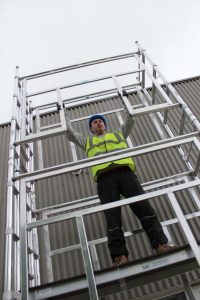 PASMA Towers on Stairs, Bridges, and Cantilever Towers
To access any of these PASMA courses, you must hold a valid PASMA Towers for Users certificate. All three courses are one day sessions that run from 8am to 4pm. Mornings are theory based with a multiple-choice test. Afternoon sessions involve erecting and dismantling a purpose-designed tower eg cantilever tower, stair tower, or multiple tower system.
Successful delegates will receive a 5-year PASMA certificate upon completion. The certificate will display the specific equipment involved in the course.
PASMA Towers for Managers
PASMA Towers for Managers is a one-day course running from 8am to 4pm. The training is theory-only where delegates will learn about the safe use of scaffold towers and access equipment. Information about health and safety guidelines surrounding working from height will also be covered in the session.
Upon completion, delegates will receive a 5-year PASMA certificate. This course is aimed at any person responsible for overseeing site-safety. This could include a building site manager, warehouse manager, or property developer.
Important information about PASMA training courses
All Access Towers PASMA training courses are run at our Croydon training centre. We employ fully qualified instructors with excellent industry knowledge and in order to offer PASMA training we are an official approved PASMA provider.
PASMA training courses are an excellent choice for anyone who regularly uses scaffold towers and low-level access equipment. Many construction companies and site-managers require PASMA certification before an operative can begin work. Although not a legal requirement, PASMA certification is recognised across the UK as a high-quality safety standard when using a scaffold tower.
If you’re involved in the construction industry or your work requires the use of a scaffold tower or low-level access equipment, attending a PASMA course will ensure that you understand all the best practices when working from height.
PASMA training will also teach you how to safely assemble, dismantle, and transport a scaffold tower, and provide information about current health and safety guidelines when using access equipment.
If you’re interested in attending one of our PASMA training courses have a look at our calendar to view upcoming availability. If you’ve got any questions about our PASMA training courses or any of our other services get in touch today. You can call us on 0208 665 1181 or use our online contact form.
What are the different types of PASMA training courses?
Access towers have become an extremely versatile and popular way of working at height, offering a safer and more flexible option than the traditional ladder.
However, like almost all installations found on construction sites, access towers must be installed and used with an appropriate level of training.
At Access Towers Services Ltd we have a range of PASMA (Prefabricated Access Suppliers’ and Manufacturers’ Association) approved training courses. PASMA is the nationally recognised body for mobile access tower training and safety, and the courses are suitable for all levels of construction staff in a variety of situations.
Our courses run from Monday to Sunday and are available all year round. They can be held at our Croydon headquarters or onsite. Let’s have a closer look at the range of courses we offer:
Towers For Users
The PASMA Towers for Users Course features a hybrid of home and classroom learning. The training is on mobile access towers that are approved to BS EN 1004, the British Standard/Mark of Approval. The theory behind the course will now be completed fully online, along with a multiple-choice test through PASMA’s online portal. After passing the test the delegate will be able to complete the practical module of the course on-site at our Training Facility. We expect delegates to be at our Training Facility for no more than 2.5 hours.
The syllabus includes assembly, dismantling, altering and moving access towers. Delegates will learn to identify hazards, inspect mobile access towers, learn about the latest industry regulations and safely use access towers.
Training For Managers Who Use Towers
The PASMA Towers for Managers Course is a minimum of 6 hours and can host up to 12 delegates per instructor. The aim is to learn about current legislation, regulations and guidance affecting work at height using mobile access towers, so that such operations can be supervised safely and within regulations.
Training For Towers And Low Level Access
The PASMA Combined Course contains both theory and practical elements that culminate in a PASMA approved qualification for Towers for Users and Low-Level Access. As our most popular course, it enables delegates to efficiently and effectively empower themselves to work safely across many sites. Again, it involves a mixture of online and in-person learning, combining low-level access and mobile access training, safe usage of podium and the safe use of mobile access towers, along with hazard identification and equipment inspection.
Towers On Stairs
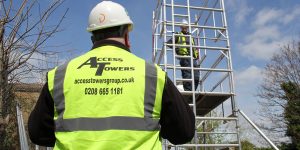 The PASMA Towers on Stairs Course is essential for people using towers in difficult areas where staircases and stairwells create an uneven level. For anyone working in maintenance, painting and decorating and overhead installations on stairs, this course provides all the vital information for creating a safe working environment. It runs for a minimum of 6 hours and can host up to 8 delegates per instructor. The course curriculum includes learning how to correctly assemble, dismantle, alter and move towers on stairs, hazard identification, safe usage of towers on stairs and a look at the latest legislation around the subject.
Towers With Cantilevers
The PASMA Towers with Cantilevers Course focuses on the use of cantilever towers that provide access to areas where obstacles cannot be temporarily removed. Delegates will learn how to safely use towers to avoid obstructions, inspect them for potential hazards, safely assemble and disassemble/move cantilever towers, and learn more about current regulations governing their use.
The course is a minimum of 6 hours and can host up to 8 delegates per instructor.
 Linked Towers For Users
As the name suggests, this course is designed to enable the safe use of two or more towers joined together. Linked towers are used to access the entire exterior of a building for maintenance work including painting, plastering or window replacement. The course involves spending one day at a PASMA approved training centre where you will learn how to safely assemble, dismantle, and use linked towers. The course involves a combination of practical and theory-based assessment and will take one day to complete.
Towers With Bridges
The PASMA Towers with Bridges course is designed to provide training for users of access towers where there is an obstacle at ground level. Two or more towers are joined together at their end or side to create a long uninterrupted platform and leave a clear space at ground level. In this course, you will learn how to limit the impact on the surrounding area of any access equipment, along with the creation of a safe and secure tower bridge, access routes for pedestrians and vehicles and the connection of two or more towers at their end or side.
For more information about all our courses and calendar dates, contact us today. We realise that time is always tight where construction projects are concerned, so please contact us regarding any dates not listed in our calendar and we’ll try our best to deliver our course suited to your needs.
Access towers vs ladders – 3 reasons why access towers are the best choice
Both access towers and ladders are effective tools for reaching areas above ground level. Whether you’re working on a small-scale home renovation project such as painting your house exterior or a larger job involving more time spent working at height and the use of more tools and materials, you’ll need the best equipment to gain access to any out-of-reach areas.
Access towers vs ladders comparison
|
Access towers |
Ladders |
| Advantages |
Creates a stable platform |
Cost-effective |
| Advantages |
Easy to erect |
Easy to transport |
| Advantages |
Suitable for prolonged use |
Good for confined spaces |
| Disadvantages |
More expensive than ladders |
Only suitable for short use |
| Disadvantages |
Training may be required before use |
Not appropriate in adverse weather conditions |
| Disadvantages |
May not be suitable for smaller areas |
Restricted space constraints |
3 reasons to use access towers when working at height
At Access Towers, we supply a variety of different scaffold towers for use in a diverse range of situations. From narrow width towers to cantilever and stair towers, all our towers are of the highest quality and provide a safe and secure means of access for working at height.
When you need a stable platform for carrying out repair, maintenance, or renovation works, access towers are an excellent solution. With our access towers you get:
- A safe and strong platform – Access towers are designed to create a stable platform for working at height. Depending on the access tower you choose, they can accommodate a single user or multiple users. They are easy to climb via fixed steps and are safely anchored in place to reduce movement.
- Better reach – Compared to ladders, access towers are far better at providing access to difficult to reach areas. In certain situations, ladder users may feel they need to stretch to reach areas of roofline or other difficult to reach sections of a building. This can be dangerous and result in an accident. With an access tower, however, a guard rail and solid platform create a steadier area from where to work.
- Easier use of equipment and materials – Whatever job you’re working on, some tools and materials will be needed. When using a ladder, you will need to carry all equipment and materials on your person. This can sometimes be tricky and cause some instability. With an access tower, you can place any equipment and materials on the platform to give you freedom to work safely and effectively.
As you can see, access towers are an excellent solution for working at height scenarios. If you’d like to find out more about our range of towers and other access equipment, call Access Towers on 0208 665 1181 or contact us online.