Working at Height in Poor Weather Conditions: What to Be Aware Of
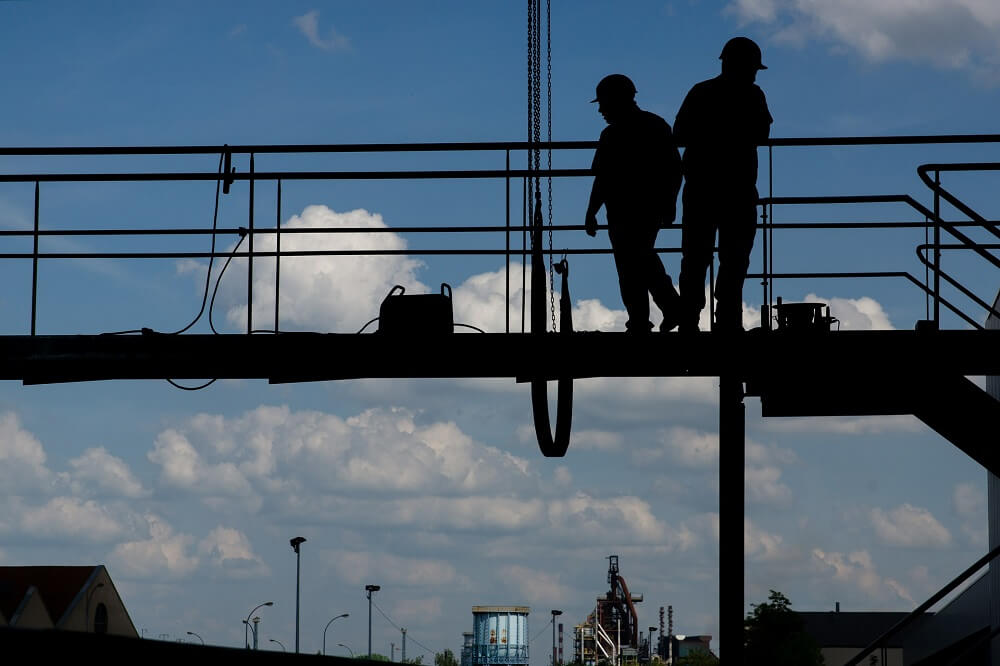
It’s one thing to be safe when working at height in optimal conditions; that in itself can be tricky. It’s a whole other task to ensure everyone is safely working at height when weather conditions are poor. At this time of year, ice, wind, snow, and other adverse weather conditions could all threaten your safety and the safety of others on site.
The best course of action is to be aware and to be prepared. Proactively ensuring that all potential problems are accounted and accommodated will make all the difference when ensuring the safety of everyone involved. Top things you may not have thought to keep in mind are:
Frozen Fog
It’s easy to account for snow because it is near-impossible to miss. Something easy to overlook, however, is a fog that then settles and freezes. If visibility is impaired by fog, workers know it is no longer safe. However, it is important to be aware of the condition of the site after the fog has ‘cleared’. This water can and often does freeze onto your work area, so tread carefully at height and make sure everyone is secured as soon as possible.
Wind Conditions
The clear issues in high-wind conditions include unstable platforms, but more is at risk here even in less windy situations. It doesn’t take (comparatively) much wind to cause falling debris or for a worked to lose stability. Even small amounts of instability can be incredibly dangerous, especially when someone is already battling adverse weather such as extreme cold when working at height. It’s imperative to check wind conditions at the height you are working at, to account for any instability of people or objects that this could cause.
Lightning
When working at height, the operative often becomes the highest point meaning they are more likely to be struck by lightning, should it occur. Clearly, one would not be working at height if there is thunder and lightning. However, this weather can come with little warning so it’s important to keep vigilante at the slightest sign or warning that lightning could occur.
The risks of working at height are numerous; they only get greater when bad weather is also in the mix. These points are just some of the lesser-considered risks when working at height in poor weather but it’s advisable to keep these in mind along with the other, more clear concerns for those working on site.
How not to use an access tower – the top 5 mistakes when working at height.
Falling at height, as reported by the HSE, amounted to 25% of all fatal injuries in the workplace in the UK this past year alone. A worrying figure, considering there is so much regulation that has been done to provide workers with safe working at height environments. This number could be greatly reduced by some simple safety procedures and standard training.
The following ‘don’ts’ might seem obvious to some, but by those numbers, Access Towers Services are compelled to tell you what not to do when using an access scaffold tower or working at height. If you have committed any of these potentially fatal mistakes yourself, get yourself on one of our training courses.
Mistake 1: Carelessness working at height
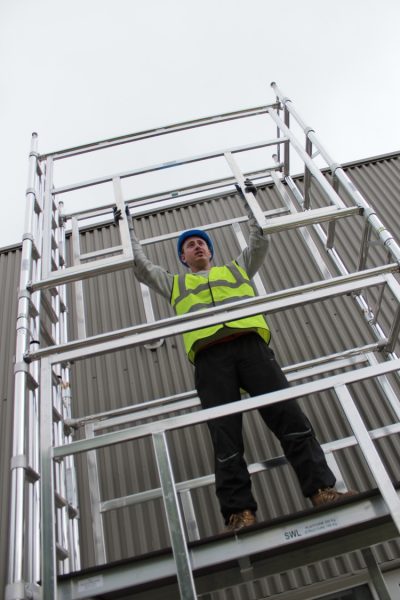
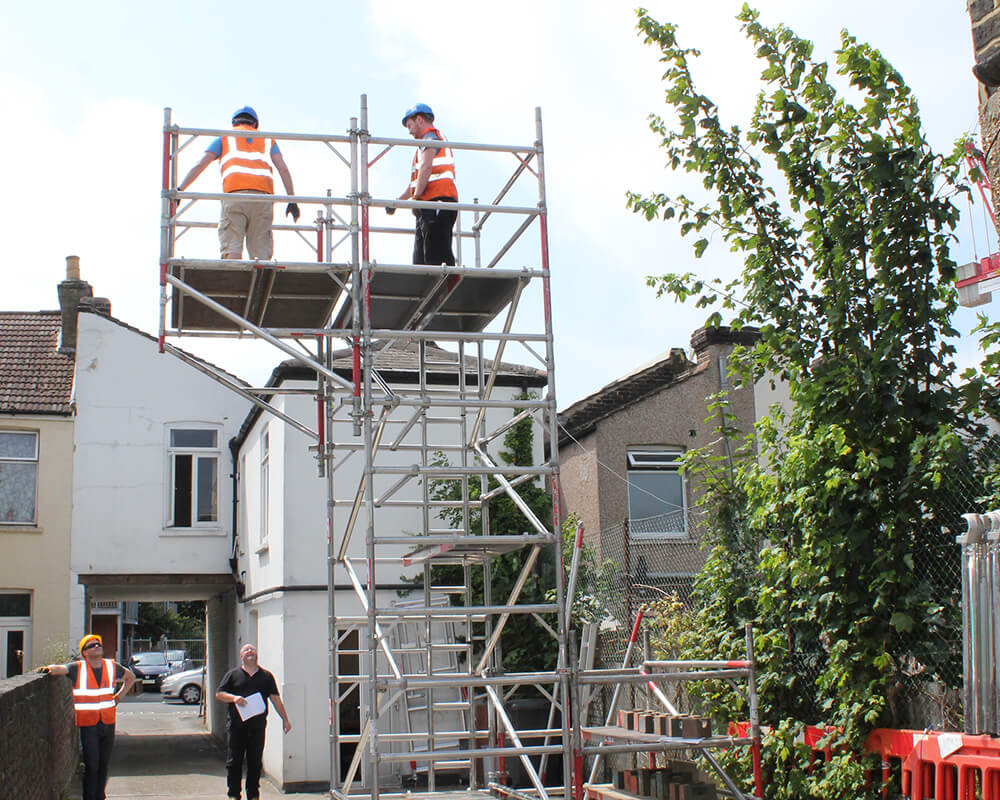
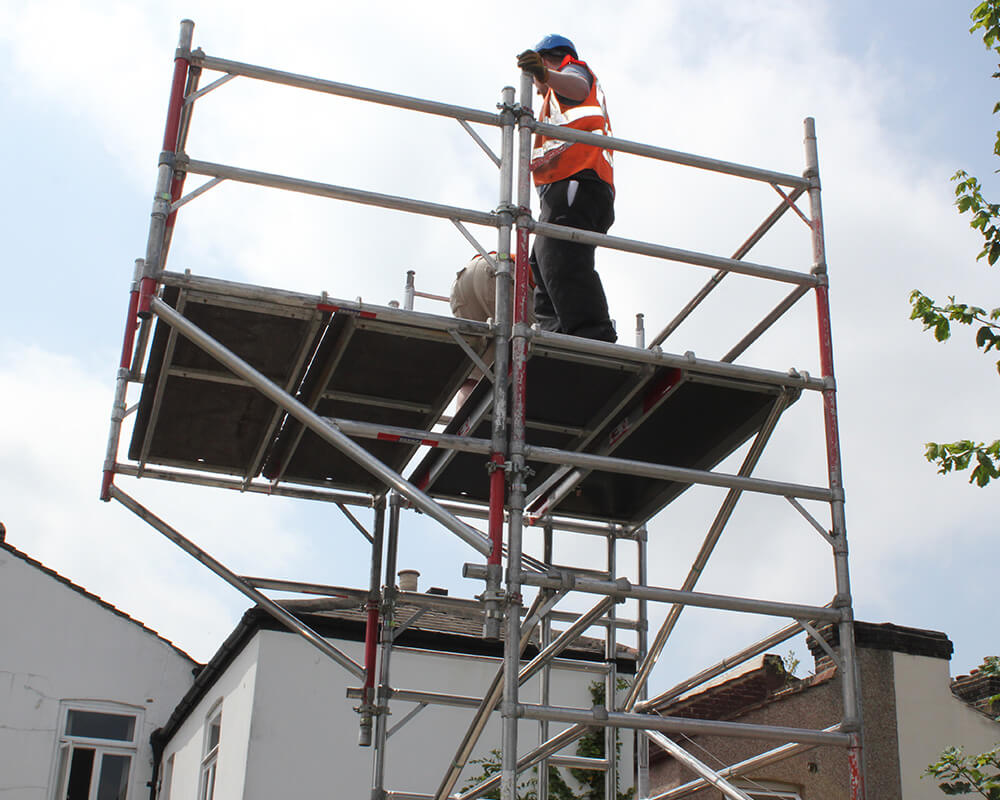
We don’t want to preach, but it doesn’t matter how safe your access equipment is, if you’re not behaving safely you’ll still risk falling. Don’t jump on, run or lean over the side of the access tower. If you tilt it or slip, your safety is compromised.
Mistake 2: No access route
Without an access route between the scaffold tower and the building, there’s a gap. No matter your gymnastic ability, under no circumstances should you attempt to leap between this gap. There should be a proper access route created for you to safely get to the building. Don’t bridge this gap yourself.
Mistake 3: Extreme weather
Secure your access tower in the event of a little bad weather, but when it gets extreme, just don’t work on it. Strong wind, rain or storms can put you in exceptional danger when working at height. Your access tower can stand strong, but you can’t. You might be knocked off balance or hit by a flying branch. The possibilities are endless. Just stay safe.
Mistake 4: Power lines
Posing many potential risks, check for any overhead power lines before you set up or use your access tower. We don’t think it needs to be explained what might happen if you hit a power line whilst standing on a tower at height. You know.
Mistake 5: Weight
Your access tower will be able to keep you up even after your lunch break, but don’t exceed the weight load it can safely hold. Make sure not to store anything up there either, as it poses its own risk of falling from height, causing potential injury on the ground.
Another definite ‘don’t’ is to start stacking up items on the access platform to gain extra height. This is so dangerous as they aren’t secured to the access tower and aren’t a regulated piece of equipment. If it seems stupid, just don’t do it.
Access Towers Services provide both the equipment and the training
Safety when working at height is one of the most vital health and safety regulations. To make sure you always get it right, Access Towers Services Ltd can provide regulated access towers for working at height, along with up to date PASMA and IPAF training courses to ensure your workers are educated on their own safety. Call us on 0208 665 1181 to find out more, or find all of our contact details here.
Constructing Access Scaffold Towers: The Basics
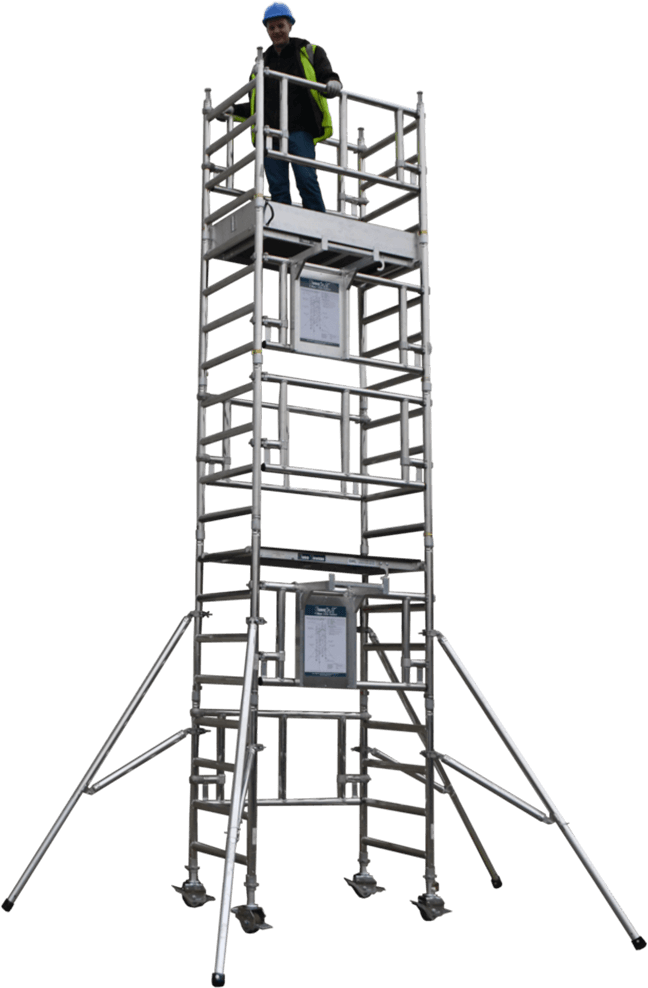
Any scaffold tower constructed needs to comply with safety regulations for working at height. They need to be constructed and dismantled by someone who has the correct training and is fully competent. It is extremely important to ensure that your scaffold tower is constructed by someone trained, or by a fully qualified external scaffolding company.
There are some basic guidelines below for you to follow to make sure you are prepared if you need scaffold constructing on your project.
Tip 1: Are You/They Trained?
There are training courses and qualifications available to prove someone is adequately trained to construct or dismantle a scaffold (or access) tower. Our PASMA training courses are designed to ensure you are fully qualified in access scaffold tower construction and working while using a scaffold tower. Training is the vital first step in taking the necessary precautions for construction and operating an access scaffold tower.
Tip 2: Know The Dangers
By correctly constructing the scaffold tower, the dangers of working at height are greatly reduced. If construction is incorrect, you are at danger of harm during the process of assembling or dismantling, harm if there is an unnoticed defect in the fully constructed tower, or at danger of falling or overturning equipment when working at height on an access tower.
There are some basic safety tips to follow when overseeing a project involving a scaffold tower to check that it has been successfully assembled before its use. These, however, should be reinforced with adequate training and regulations.
Tip 3: Basic Safety Testing of Scaffold Towers
Check:
Ground Level
No matter how well constructed the scaffold tower, if the ground beneath cannot support it, or is soft/waterlogged, you put anyone using the tower in danger. Make sure the ground is solid and any debris is removed before construction or use.
Installation
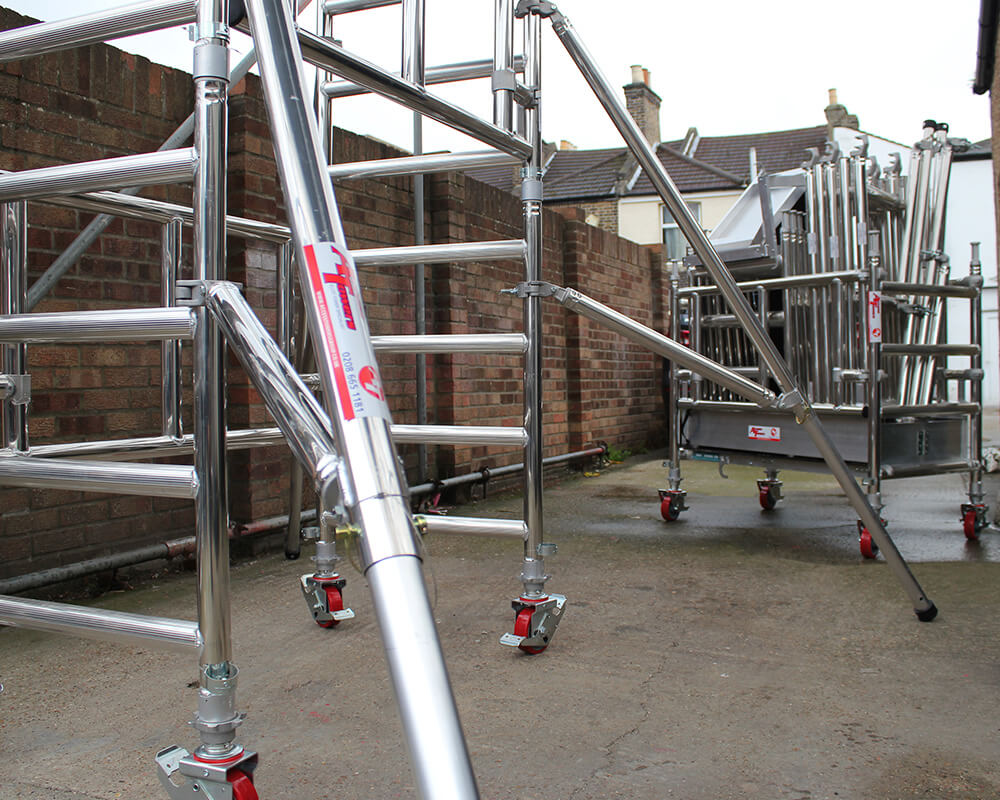
Check all the relevant components of the access tower are complete, sturdy and are free from rust and damage. If they are not, this is a quick indicator that the access scaffold tower is not fit for use.
Regular Assessments
Make sure a competent person is assessing the safety of the access tower at regular intervals after installation. If the fall risk is two metres or higher, then the tower needs to be checked at least once every 7 days after installation.
When Using and Moving
After construction, the tower is going to be in use. Do not use your scaffold tower in strong winds or poor/dangerous weather conditions. Do not use your scaffold tower for anything other than its proper use, it cannot be used as a prop or support for other equipment such as ladders. Do not risk at any point using the access tower with missing or broken parts.
When moving the access tower, check for any obstructions above it, such as power lines. Reduce the height of the tower to under 4 metres. Do not move when anyone is on the tower or it is holding materials, and make sure you are trained in moving the equipment at base level safely.
Get More Information On Constructing Access Scaffold Towers
For further information, take a look at the HSE’s guidelines for health and safety regulations in construction. If you would like to start using access scaffold towers in your workplace, and want to make sure your team are trained, you can access our PASMA training information here.
To hire access towers and platforms that you can be certain are safe to construct and use, Access Towers Services Limited can provide the right equipment with fully trained installers for your project. Call us on 0208 665 1181 for more information, or access all our contact details here.
Scaffolding Projects Around The World
Some of us have seen so much scaffolding throughout our lives that it now just blends in with the landscape. We should, however, remember that it is because of scaffolding that amazing buildings are able to be built. We have picked a few of our favourite projects that required the help of scaffolding to achieve its full potential.
The Burj Khalifa
Situated in Dubai, the Burj Khalifa is the tallest building in the world and has set many world records when it comes to its height and design. It holds records for the highest number of storeys in the world, highest outdoor observation deck in the world and tallest service elevator in the world, just to name a few. The building took six years to complete and over 22 million man-hours. The project involved over 300 engineers to work on the exterior cladding; in order to keep the final height a surprise for the public, the scaffolding was built as the building grew. It is now open to the public with visitors from across the world wanting to visit the observation decks on levels 124 and 125.
The Statue of Liberty
The Statue of Liberty underwent restoration work in 1984 which lasted until 1986. A team of workers from all industries came together to complete the project. One of the first steps was to install scaffolding around the whole exterior of the statue, which was made completely from aluminium and at the time was the world’s largest free-standing scaffold. Ellis Island was closed to the public during the restoration, but people still photographed the statue from afar, making it the world’s most photographed scaffolding project.
The Eden Project
St Austell, Cornwall, View of the biomes at the Eden Project. Inside the biomes, plants from many diverse climates and environments have been collected and are displayed to visitors. The Eden Project is located in a reclaimed Kaolinite pit, located about 5 kilometres from the town of St Austell, Cornwall in England.
The idea for the Eden Project first came about in 1995 with construction beginning in 1998. Its purpose is to house some of the world’s most important plants and allow the public to appreciate aspects of nature they may not have the opportunity to see. The use of 230 miles of scaffolding to construct the Biomes earned the project a place in the Guinness Book of Records.
Equipment Hire with Access Towers Services
If you have an upcoming project that requires you to work above the ground, we hire out access towers and low-level platforms for as long as you need. Get in touch to discuss your working at height needs by calling us on 0208 665 1181 or send us an email and we’ll get back to you shortly.
Mastering Scaffold Towers: When and How to Use
Are you planning a home renovation or DIY project that requires working at height? If yes, then safety should be your top priority. Using the right equipment is crucial to ensure a safe and efficient work environment. Scaffold towers are an excellent choice for projects that require stability and mobility. They provide a secure platform for workers, tools, and materials while ensuring ease of movement across the work area. But with so many options available, it can be daunting to rent a scaffold tower. In this blog post, we will address all your concerns related to scaffold towers. We’ll discuss why scaffold towers are essential for home projects, safety guidelines while using them, and precautions to take when working on them. Additionally, we’ll help you make an informed decision by discussing whether it’s better to rent or buy a scaffold tower for your specific needs.
Understanding the Need for Scaffold Towers in Home Projects
Scaffold towers are essential for providing a stable working platform and accessibility to elevated areas within a home environment. These structures are necessary for compliance with working-at-height regulations and contribute to minimizing risks due to their solid construction. Moreover, scaffold towers ensure safety during long periods of work, offering a secure workspace for various home projects. When working on construction sites or at ground level, necessary precautions must be taken, especially when considering the piece of equipment used and the required safety certificates, such as the PASMA certificate in the UK. Additionally, the dismantling and erection of tower scaffolds, along with the use of loft ladders and castors, play a vital role in maintaining a safe work environment.
Considering Scaffold Towers Over Ladders for Large Projects
When tackling large construction projects, scaffold towers offer a safer alternative to ladders. With their level working platform, they minimize the risk of accidents, providing a secure and stable workspace at ground level or on uneven terrain. Scaffold towers are crucial for working at significant heights, ensuring accessibility and safety for both workers and heavy pieces of equipment. Their sturdy construction and certification make them essential for long periods of work on construction sites or home projects. Additionally, necessary precautions such as proper training and adherence to safety regulations, including PASMA, HSE, and UK standards, are paramount for the safe erection, dismantling, and use of tower scaffolds.
Matching the Right Equipment to the Task
When working on construction projects, ensuring safety, accessibility, and efficiency is crucial. Scaffold towers offer a safe working platform for heavy equipment and construction work, especially in a home environment where tasks may involve working at ground level or high elevations like power lines. The versatility of scaffold towers makes them necessary for various construction sites, providing the necessary precautions for UK-based worksites. With their ease of erection and dismantling, tower scaffolds are essential pieces of equipment for any workspace. It’s important to consider the type of tasks and the work environment when choosing between tower scaffolding and loft ladders. Additionally, obtaining a PASMA certificate ensures that proper protocols are followed when using tower scaffolding, minimizing risks and ensuring a safe work environment.
Safety Guidelines While Using Scaffold Towers
Prior training courses are essential for scaffold tower work to be performed adequately. Compliance with safety regulations during scaffold tower assembly is crucial. Regular risk assessment of scaffold towers is necessary to uphold safety standards. Scaffold towers must be erected in accordance with safety executive guidelines to ensure optimal safety. The use of safety harnesses while working on scaffold towers is imperative. Safety should always be the top priority when working on construction sites, especially on tower scaffolds. Regular risk assessment is important to ensure safety in the work environment. The certificate from PASMA is necessary to prove compliance with safety regulations.
Assembling and Loading the Scaffold Tower Safely
As you assemble tower scaffolds, it’s crucial to adhere to the guidelines provided in the instruction manual. Using base plates is essential for stability at ground level, ensuring a secure work environment. Implementing guard rails and advanced guard rail systems is necessary to maintain safety while working at heights for a long period of time. Regular safety inspections are crucial to identify and address any potential hazards promptly. When dismantling the scaffold tower, necessary precautions must be taken to avoid any risks or accidents. These measures align with the safety protocols recommended by UK regulatory bodies such as PASMA and HSE, ensuring that the assembly and loading process adhere to safety standards. It’s imperative to prioritise safety and follow these protocols when working on scaffold towers in any work site.
Protocols for Working on Scaffold Towers
Working on scaffold towers requires strict adherence to safety protocols, especially considering adverse weather conditions. Guard rails must be in place to secure the towers in windy weather, and outriggers should be used for added stability. It is crucial to take necessary precautions during construction work and exercise caution when using scaffold towers in high winds. Safety guidelines from the UK’s Health and Safety Executive (HSE) and the Prefabricated Access Suppliers and Manufacturers Association (PASMA) emphasise the importance of following safety regulations and obtaining proper training certificates before working with tower scaffolds. Additionally, regular risk assessments, as well as thorough dismantling procedures, are essential to ensure a safe working environment. With the correct pieces of equipment and the application of necessary precautions, working on scaffold towers can be carried out safely and effectively.
Precautions to Be Taken While Using Scaffold Towers
Competent handling of tower scaffolds is crucial, in compliance with safety regulations. It’s essential to ensure that the tower scaffolding is erected on level ground and cleared of any obstructions, maintaining a safe work environment. To prevent falls, the use of safety harnesses when working at a height for a long period of time is necessary. Regular inspection of tower scaffolds is vital to uphold safety standards, especially on construction sites where necessary precautions should be observed. Additionally, individuals operating tower scaffolds should have the necessary certification from recognized bodies like PASMA in the UK to ensure proper dismantling techniques, ensuring workplace safety.
Training Requirements and Hazard Avoidance
When working at heights, certification courses for scaffold tower safety become necessary to comply with safety regulations. These courses ensure that individuals are properly trained to work on scaffold towers, reducing potential hazards in the work environment. Following safety regulations for scaffold towers is essential, and this requires completing training courses to understand necessary precautions. Whether it’s for construction sites or home projects, safety training for scaffold towers is crucial to prevent accidents and ensure a secure workspace. Additionally, proper training helps in dismantling and erecting tower scaffolds safely. By following guidelines from organizations like PASMA and HSE, individuals can work confidently on tower scaffolding, ensuring their safety and that of others around them.
Scaffold Tower Usage and Safety FAQs
Welcome to our Scaffold Tower Usage and Safety FAQs, where we provide valuable insights into the optimal use of scaffold towers and essential safety precautions. Whether you’re a seasoned professional or a DIY enthusiast, understanding when and how to use scaffold towers is crucial for a safe and efficient work environment.
When is it best to use a scaffold tower?
Scaffold towers are best suited for larger tasks that require a stable workspace, such as rendering, bricklaying, and roofing. Their advantages lie in size and surface area, making them ideal for prolonged jobs that demand a dedicated location.
What makes scaffold towers more suitable than ladders for certain tasks?
Scaffold towers provide a solid workspace with enough room for tools and accommodate multiple workers. They are favoured for tasks like rendering and bricklaying due to their stability and larger surface area.
Why are ladders more suitable for quick or smaller jobs?
Ladders are convenient for quick jobs as they can be set up and taken down swiftly, offering easy mobility. They are best for odd jobs or tasks that do not require a prolonged, dedicated workspace.
How do I ensure safety when using a scaffold tower?
Safety is paramount when using scaffold towers. Ensure users are trained in working at heights safely. Avoid working in adverse weather conditions, be mindful of the safe workload, and refrain from exceeding the tower’s load capacity to prevent accidents.
What are the primary considerations for safe scaffold tower usage?
Prioritise safety by avoiding work in adverse weather, ensuring users are trained, and never surpassing the scaffold tower’s load capacity. Following these precautions is crucial to prevent falls and ensure a secure work environment.
Elevating Excellence with Scaffold Towers
Renting a scaffold tower can be a cost-effective option for smaller projects or one-time use. Consider the safety guidelines and precautions involved in using scaffold towers to ensure a secure working environment. If you’re unsure about which option is best for you, consult with access towers and we can provide expert advice tailored to your specific needs.
When To Use Low-Level Access Platforms
There is so much equipment available in the construction industry nowadays, it’s difficult to know what’s available for which projects. Access Towers Services outline some of the most popular low-level access platforms and equipment, and which jobs they can be used for.
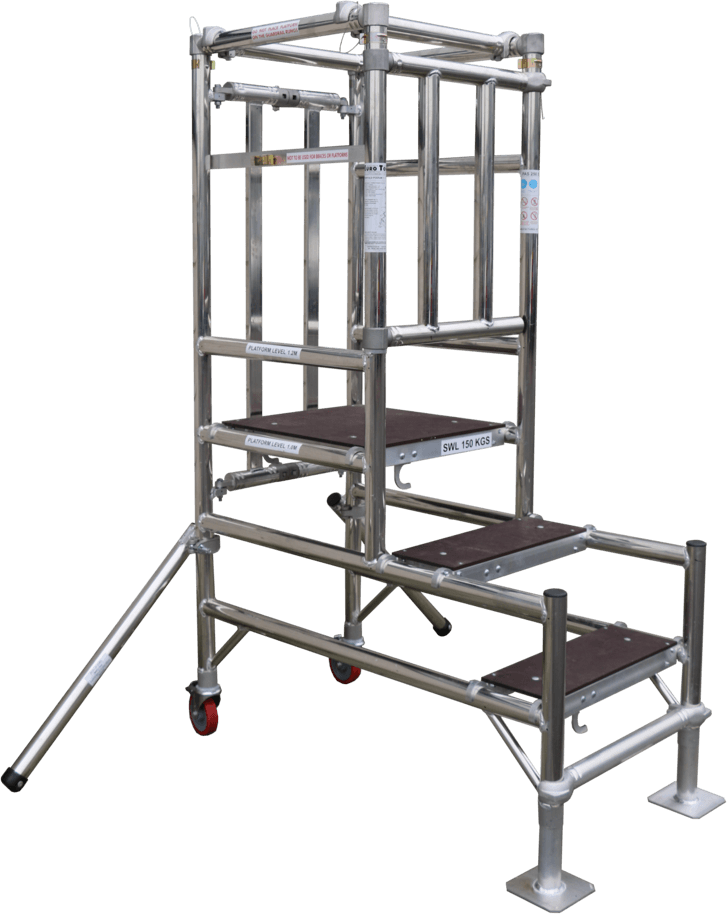
These are one of the most popular low-level access platforms. Suitable for working at a height of 3m from the ground, its weight and frame provides extra stability for the user. It’s also easy to move around a worksite due to its front wheels, which lock once the platform is in place. These units are useful for painters, plasterers, sign fitters and other trades that require working a few metres from the ground.
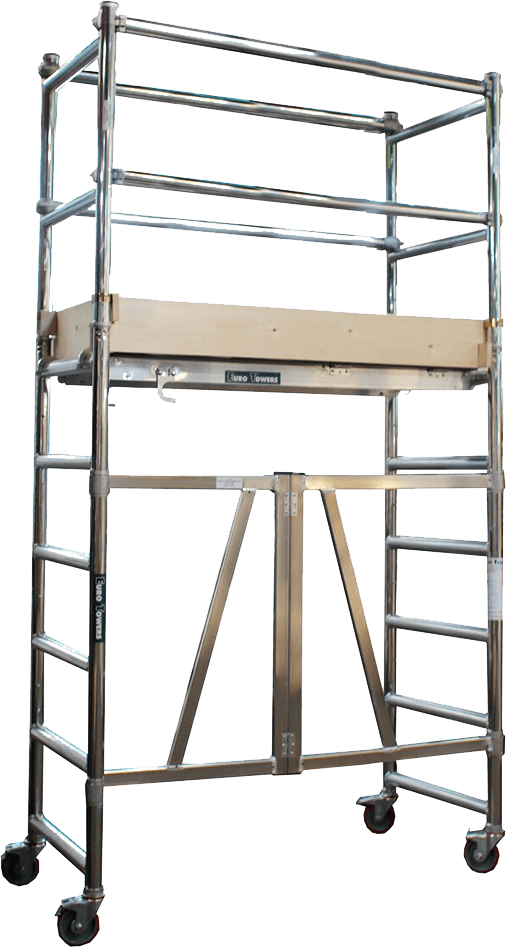
The Mini Fold unit is one of the easiest to assemble with fold-down frames and an easy-to-install base. The frame comes with wheels for easy moveability and can fit through standard doorways either folded or open. It has a working height of just under 4 metres and can be used indoors and outdoors. This low-level access platform is perfect for those needing to work off the ground with the extra support of a unit rather than a ladder.
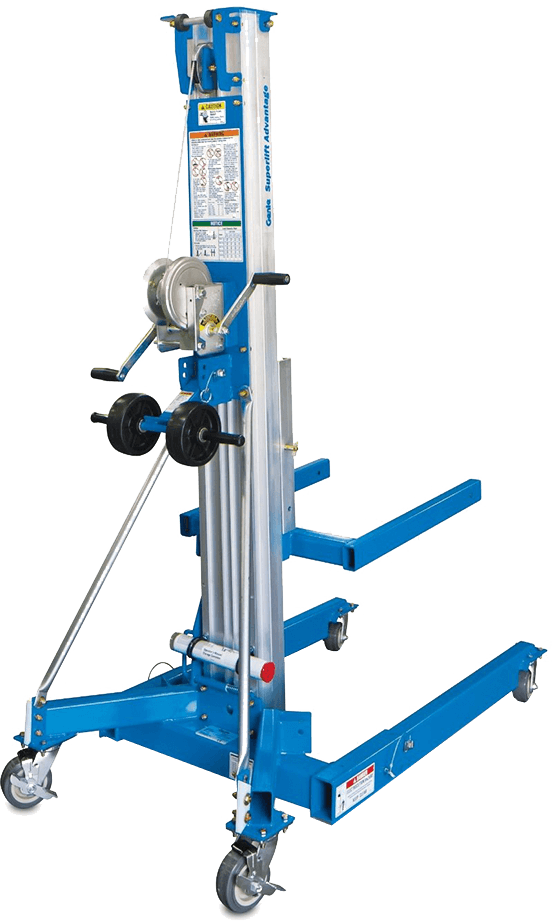
Genie is a leading brand in providing powered access equipment. They offer a wide range of lifts to suit any type of project; for example, they have lifts to transport products as well as lifts for workers who need to be at a height for a period of time. If you’re looking for powered solutions for your access needs, Genie lifts are the go-to option.
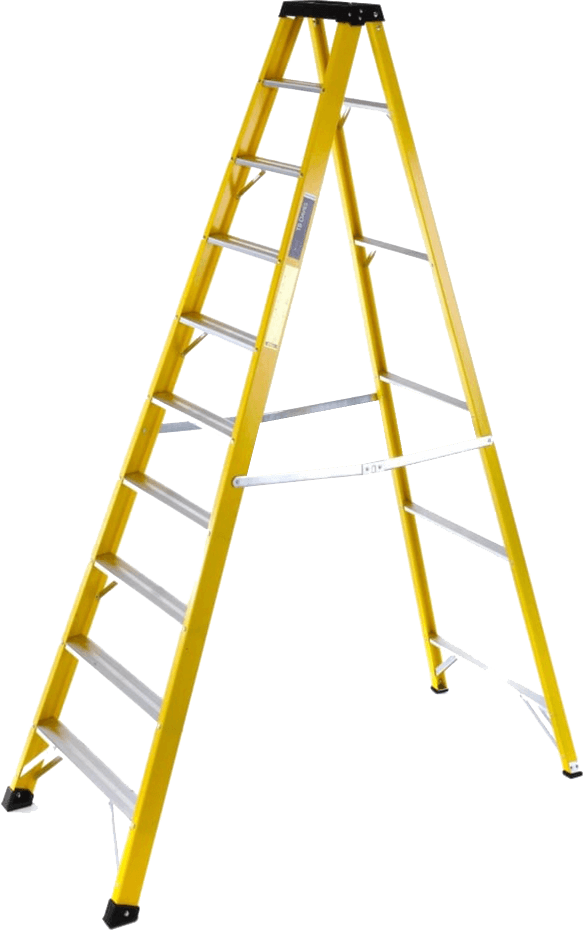
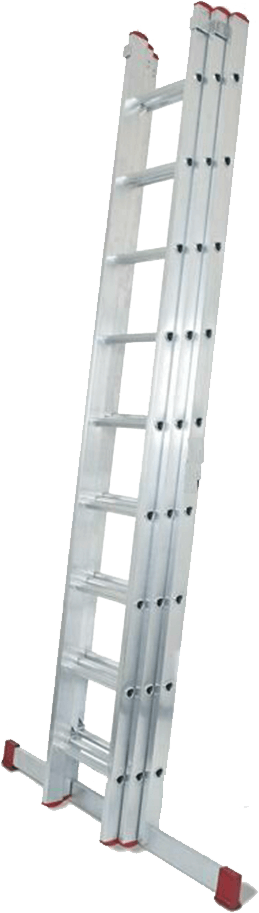
These are probably the most basic but effective equipment for low-level access. Available in a variety of types, such as alloy and fibreglass steps or A-Frame and extending ladders, using this equipment can be used for simpler tasks such as cleaning gutters or to simply gain access to a roof. They’re easy to use for lone working and are equipped with slip-resistant treads, to ensure the safety of the user.
Low-level Access Platforms with Access Towers Services
If you’re looking for low-level access equipment for your project, look no further than Access Towers Services. We hire out our equipment on a weekly basis for competitive prices, with the best part being you can extend the hire period for as long as you need. To talk to us about low-level access needs, give us a call on 0208 665 1181 or send us an email and we’ll get back to you as soon as we can.
Different Types of Scaffold Towers and Their Uses
Scaffold towers are a common piece of equipment used at construction sites, which allows workers to work at a height easily and safely. You may have seen these for yourself, but did you know there are different types of scaffold towers and scaffold alternatives, each being for specific purposes or scenarios? We outline some of the most popular scaffold types in their latest blog post.
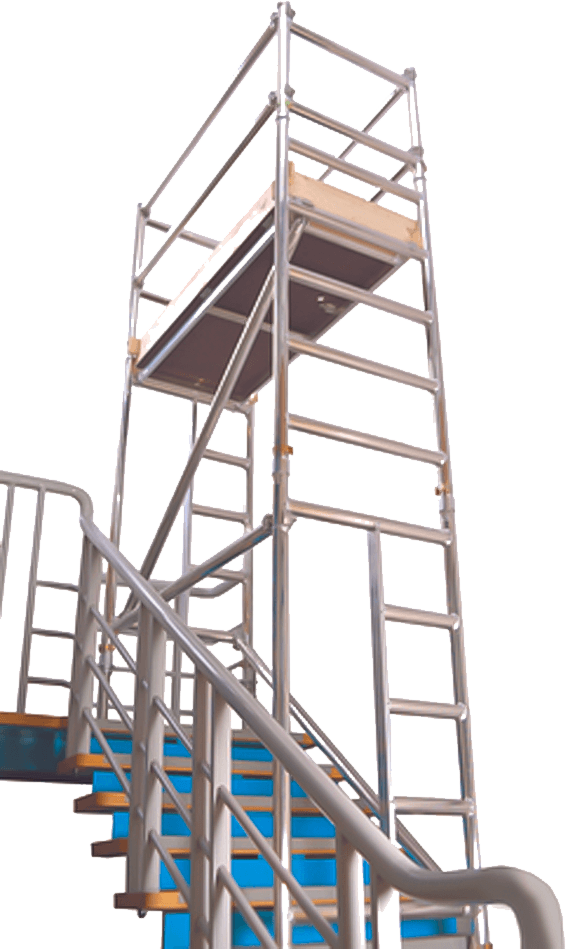
Staircase Tower
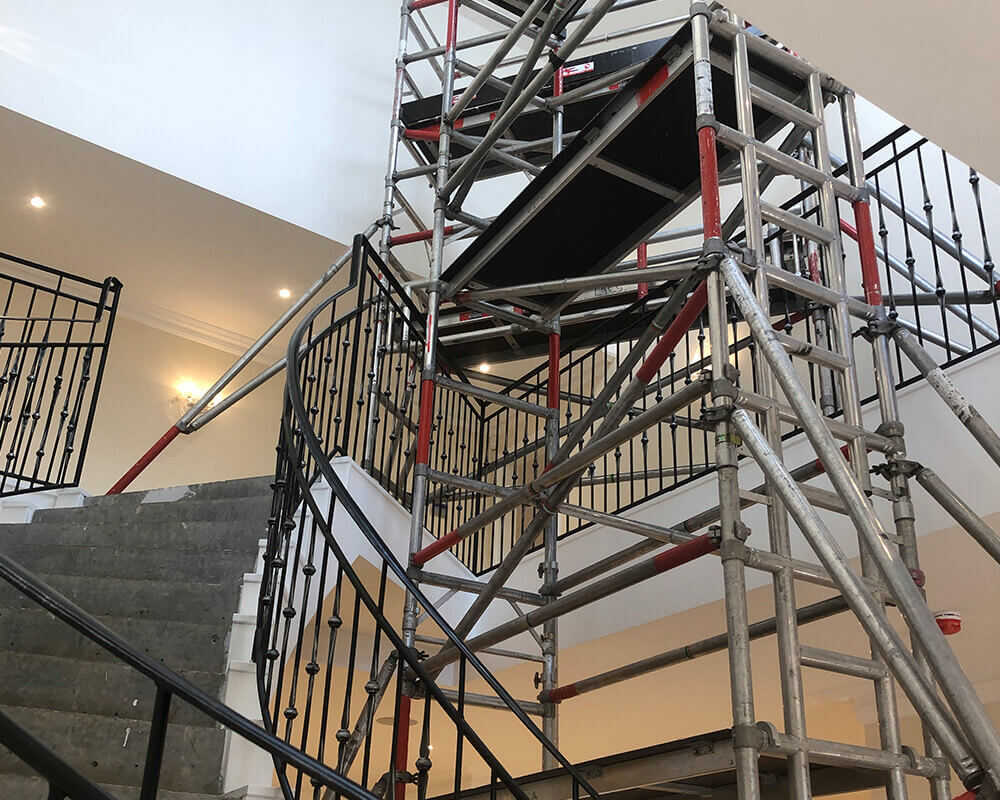
This type of scaffold tower is self-explanatory – it’s for use on staircases, indoor and outdoor. Its easy-to-assemble frame creates a hassle-free and safe environment to access hard-to-reach areas around stairs. With simplicity in mind, this is an easy scaffold tower to use to keep the job from becoming arduous.
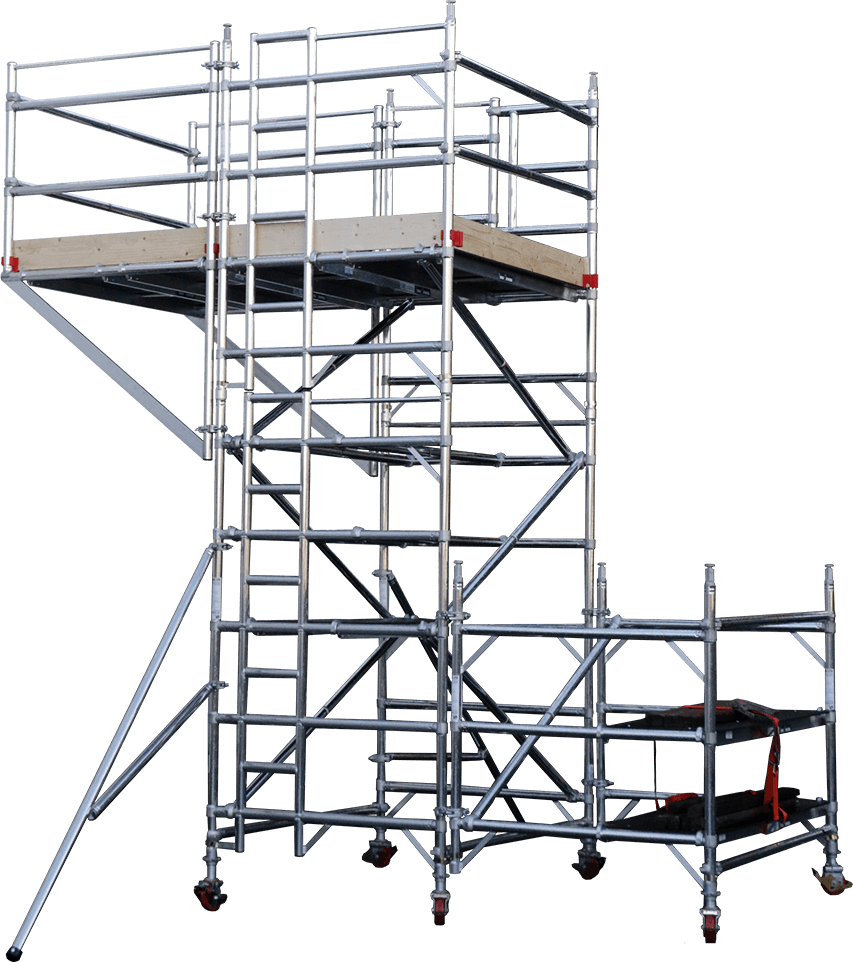
Cantilever Scaffold Tower
Cantilever Towers are used in cases where there is an obstacle that doesn’t allow a full tower to be erected and prevents you from reaching the area you need. This tower includes an additional platform, which can be installed over the obstacle and provides an easy and safe way for you to complete the task at hand.
Advanced Guardrail Scaffold (AGR) Tower
For additional fall protection, you can use the AGR tower. This tower allows construction workers to assemble the frame from the level below the one they’re assembling, which reduces the danger of falling. At each level, there is also an extra guardrail for the extra safety of your workers.
One Man Tower
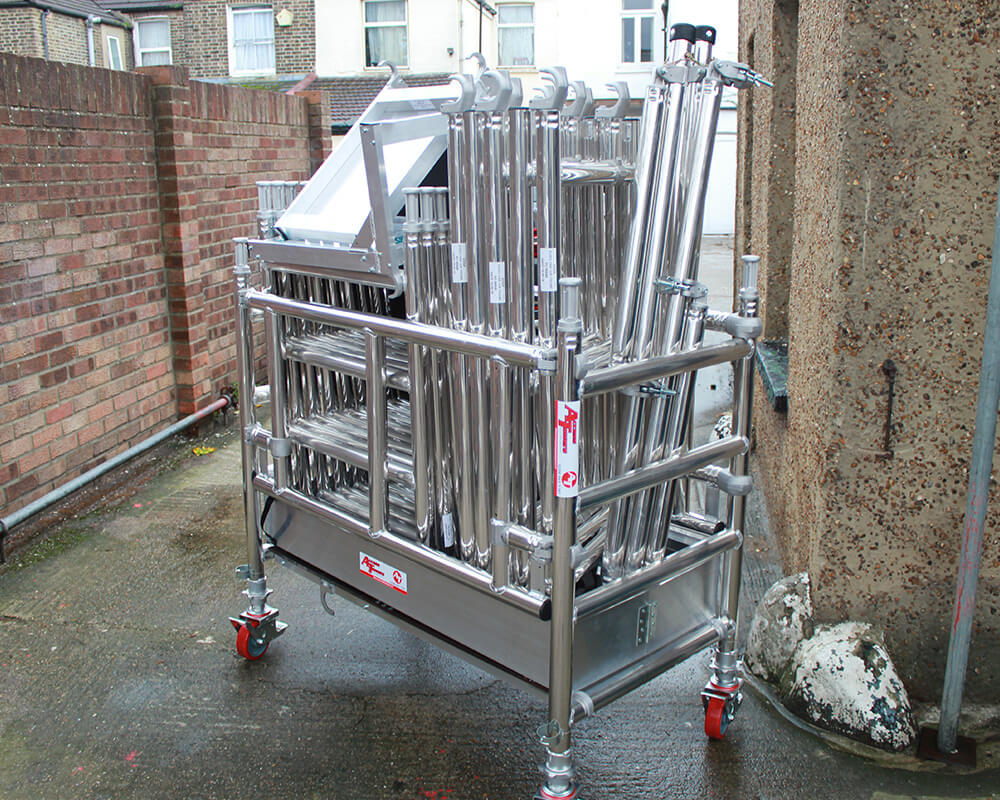
Specifically designed for lone workers, this tower can be easily assembled and disassembled by one person. The base can be turned into a trolley for easy transportation and storage, and can be fitted through doorways and into a small van.
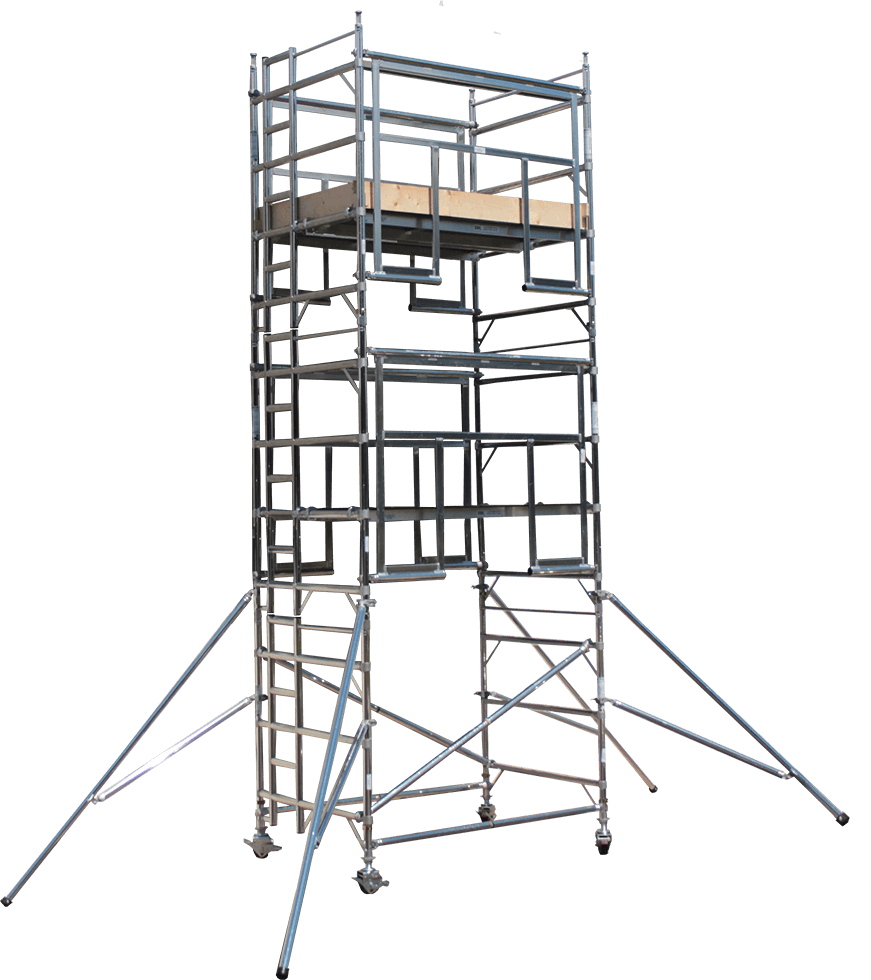
Standard Scaffold Tower
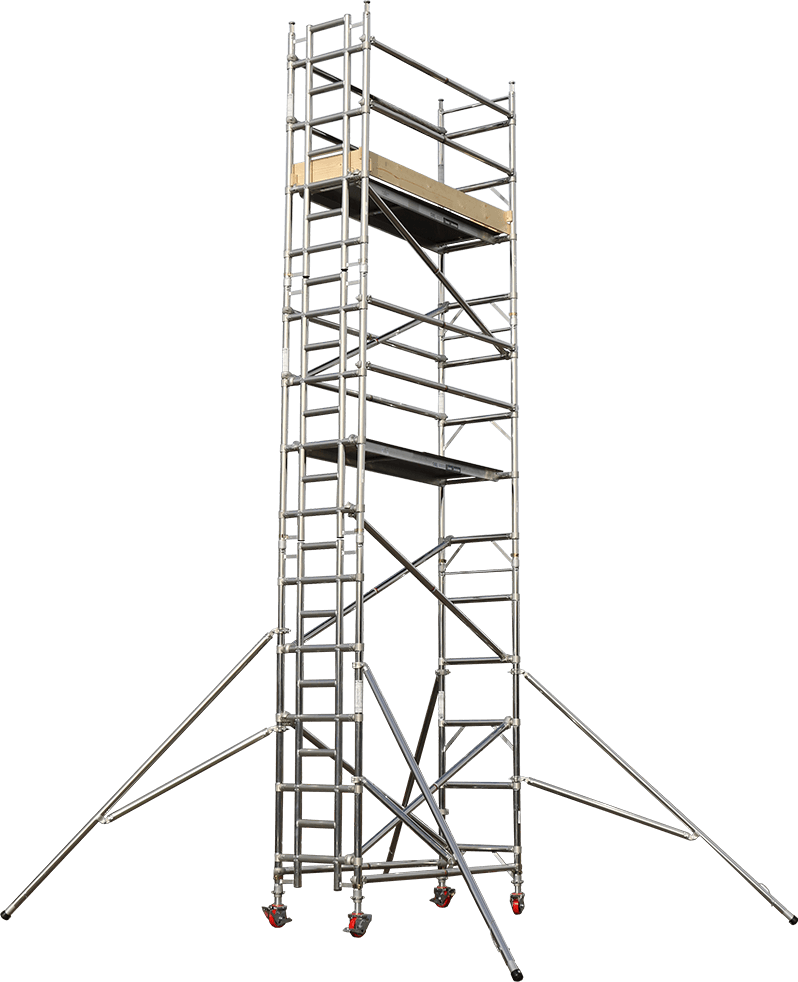
If you are completing a simple job, our standard towers may be just what you need. Available in a narrow or double width, these towers are easy to assemble and can reach heights of 8m and 12m respectively. Our most popular size is the 3m scaffold tower however not all jobs are the same so see our available sizes below to suit your needs.
Widths Available: 0.715m or 1.350m
Lengths Available: 2m, 2.5m or 3m
GRP Scaffold Tower
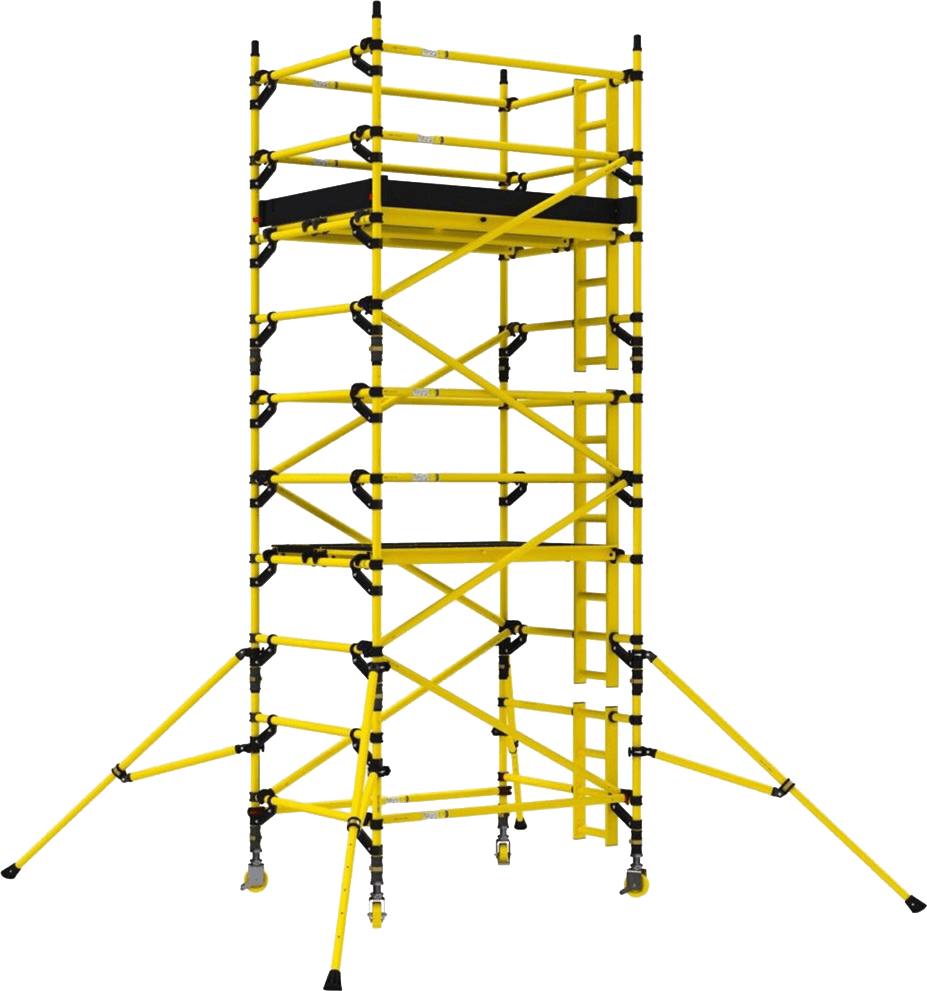
This is a different type of scaffold tower as it’s made with fibreglass instead of aluminium, which is non-conductive. These are ideal for working in areas where there are risks from high voltages, such as rail and electrical industries. This type of scaffold tower is also useful in areas where cleanliness is very important, such as cleanrooms or conservation areas, as fibreglass is a clean product and resistant to bacteria.
Different Types of Scaffold Towers – Access Towers Services
We provide different types of scaffold towers to all kinds of industries with high levels of customer service and competitive prices. If you’d like more information on the equipment we provide, just give us a call on 0208 665 1181 or send an email to info@accesstowersgroup.co.uk and someone from our friendly team will get back to you.
PASMA Training: All You Need To Know
If you work in the construction industry, you may have heard of PASMA regulations when it comes to working at heights. Whether you are about to start working at height or you’ve never come into direct contact with the organisation but want to know more about PASMA training, Access Towers Services have outlined all you need to know.
What is it and what does it cover?
The Prefabricated Access Suppliers and Manufacturers Association, or PASMA, are an industry body who focus on the safe use of equipment when working at height. Their guidelines centre around low-level equipment such as scaffold towers, towers on stairs and towers with cantilevers. For any roles involving machines such as lifts or cherry pickers, IPAF is the body you need.
Who needs it and is it a legal requirement?
PASMA training would be useful for anyone who works at height with low-level equipment, which also includes ladders. It isn’t a legal requirement but it is important to work safely and compliantly on any task you’re undertaking, which can be assured when following PASMA regulations. The 2005 Work at Height Regulations state employers must ensure their employees receive the appropriate training and must be able to prove this when necessary. A PASMA training certificate would be a great way to demonstrate this.
How long does it take to complete and how long does it last for?
The PASMA training course can be completed in one day. We can provide the training on site or you can come to us, whichever your busy schedule allows for. The PASMA training certificate lasts for five years for each individual, after this time the training would have to be taken again to ensure new legislation and PASMA regulations are being followed.
How much does it cost?
The price depends on the type of training you’re looking for. We offer various courses to suit your needs, with our prices ranging from £120 to £150. You can take a look at all our courses and see which one is best for you.
Following PASMA Regulations with Access Towers Services
If you would like to find out more about our courses or PASMA in general, please feel free to get in touch with us, and a member of our friendly team will be happy to help. You can call us on 0208 665 1181 or send an email to info@accesstowersgroup.co.uk, and we’ll get back to you as soon as we can.
Access Towers: Working at Height Guidance
You may already be, or are thinking about, working for a company that requires you to work at height. The most dangerous aspect of these jobs is not the height itself, but the lack of safety knowledge – falls are one of the biggest causes of injury in the construction industry. So, Access Towers are here to offer some working at height guidance to help keep you safe while you’re up in the air.
Working at Height Guidance
First of all, this blog post applies to anyone who carries out work at a height great enough to cause themselves an injury if they should fall. Whether you regularly work up a ladder, or at high levels of scaffolding, there are regulations that should be followed to help prevent injury. Below we have set out the dos and don’ts of our working at height guidance.
Do:
Take weather conditions into consideration – if it’s too windy or wet, the risk of injury will be higher.
Make sure your equipment is stable and suitable for the task at hand. You should also be able to access your equipment safely with the least amount of risks.
Carry out a full risk assessment to ensure extra precautions are taken where necessary. For example, if you’re working on or near a fragile surface be wary as these could break and could lead to falling debris.
Know your emergency evacuation process – this is very important as it could ultimately save your life.
Don’t:
Carry too much when going up a ladder or overextend the ladders. Make sure you’re in a comfortable position to carry out the task.
Let anyone who is not familiar with this type of work carry out any tasks without the proper training.
Fail to lose concentration when at height – the smallest mistake could lead to a fall or injury.
Attempt to complete a task using the wrong equipment or without knowing the risks.
Working at Height with Access Towers
Access Towers Services Ltd have set out these dos and don’ts to help you stay safe. If you would like more working at height guidance or would like to discuss the services we can offer you, simply give us a call on 0208 665 1181 or send us an email: info@accesstowersgroup.co.uk.
Additionally, you can take a look at this Working at Height Guide put together by HSE for further information.
We use cookies
Some are needed to make the site work, and our live chat sets its own cookies so it is ready the moment you need it. Others help us see how the site is used so we can improve it — those are yours to choose. Read our Cookie Policy.


 Falling at height, as reported by the HSE, amounted to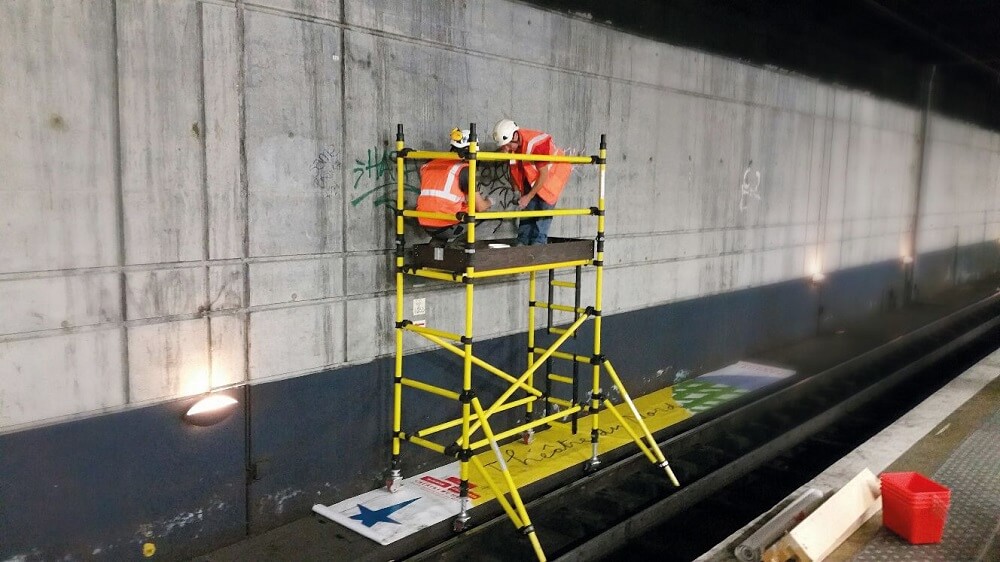



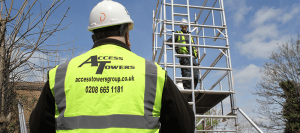 You may already be, or are thinking about, working for a company that requires you to work at height. The most dangerous aspect of these jobs is not the height itself, but the lack of safety knowledge – falls are one of the biggest causes of injury in the construction industry. So, Access Towers are here to offer some working at height guidance to help keep you safe while you’re up in the air.